Blanket Commercial Loan With Release Prices
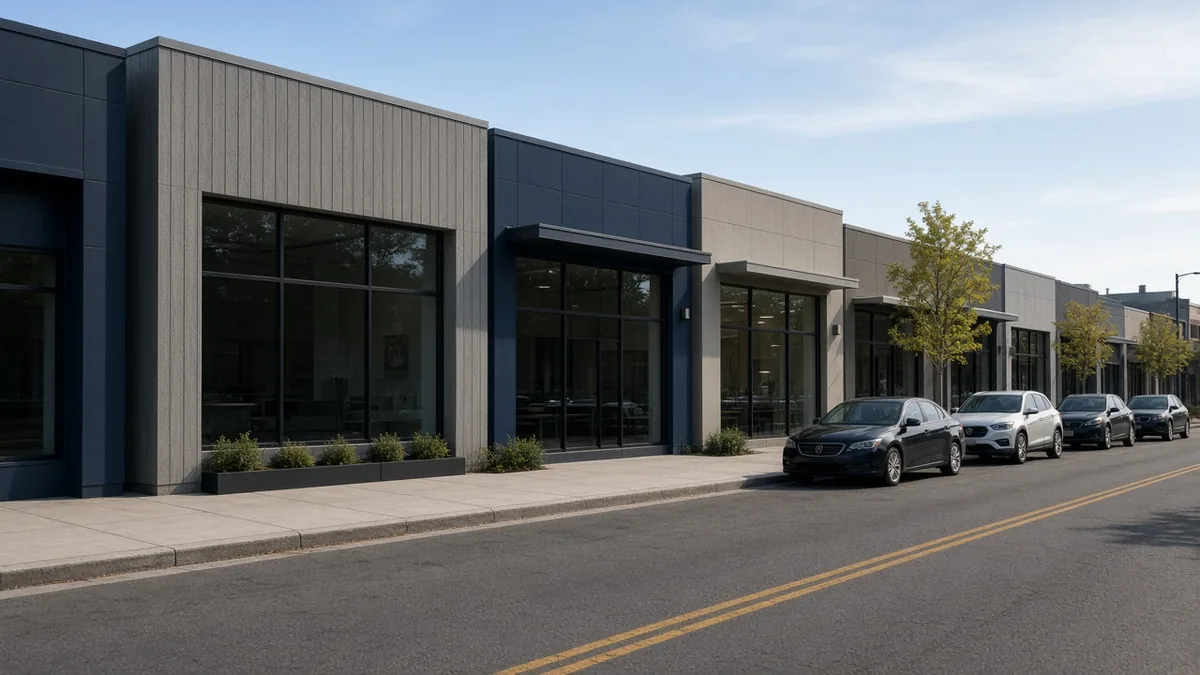
A blanket commercial loan is one loan secured by more than one stabilized income property. A single note and a lien that reaches across the assets replace a stack of separate mortgages. The feature that makes the structure livable is the release price: a dollar amount you must pay down, or otherwise satisfy, to free one property from the lien without paying off the entire loan. Investors use a blanket when the buildings are stronger together than apart, or when one closing is cleaner than four. They regret it when a release price is so high that the property they need to sell cannot leave.
This is educational, not a rate quote and not an approval. An inquiry is not an application. The properties should already be income property, not a construction or land assemblage.
A Blanket Commercial Loan Ties Stabilized Assets Together
Picture three leased buildings and one set of documents. The lender’s collateral is the group. If one building underperforms, the lien still sits on the other two. That is the point of cross-collateralization, and it is also the risk. A default on the note is a default against the pool, not a polite conversation about the weak address only. Read the cross-default and cross-collateral language as if you might someday want to keep the good building. The portfolio version of this idea is discussed in cross-collateralization for real estate investors. A commercial blanket is that idea with a release schedule you can negotiate before you sign, not after a buyer appears.
Why borrowers ask for it:
- One appraisal process, one title process, and one payment can be cheaper and simpler than three small loans that each carry a minimum fee.
- A stronger building can support proceeds the weaker building could not earn alone. You should notice that this cuts both ways. The strong asset is now in pawn for the weak one.
- A purchase of several stabilized assets from one seller can close as a package. The loan matches the purchase agreement.
Why it is a poor fit:
- You already know you will sell one asset inside a year and you have not priced the release.
- The properties are different risk types that no single coverage test describes honestly, such as a stable multifamily stapled to a vacant bay you are calling “upside.”
- Any asset in the pool is a property type this lane does not finance: construction, raw land, a church, a cooperative, or an individual mobile home. Do not hide an ineligible asset inside an otherwise acceptable blanket.
Residential rental portfolios sometimes use a different product, including portfolio DSCR structures on one-to-four unit rentals. That is not this commercial blanket. Compare portfolio DSCR loans if the collateral is houses and small multis, not commercial buildings. Unit count and use pick the lane.
Release Prices Are the Whole Game
A release price is the amount required to remove one property from the lien. It is often set above that property’s share of the loan, so the remaining collateral gets safer, not thinner, when you sell.
Illustration, not a term sheet. Three properties secure a $1,500,000 loan. Allocated loan amounts are $400,000, $500,000, and $600,000. The release price on each is 120 percent of its allocated amount: $480,000, $600,000, and $720,000. Sell the middle building and you must pay the loan down by $600,000 to release it, even though its “share” was $500,000. The extra $100,000 deleverages what remains. If the sale will not net $600,000 after costs, you cannot deliver clear title unless you bring cash or the lender agrees to a different number. That agreement is much harder after the listing is live.
Ask these questions while the draft is still a draft:
- Is the release a right, or a request the lender may refuse?
- Is the price a percent of the allocated loan, a percent of the original appraised value, or a fixed dollar figure?
- Do partial releases require a coverage test on what remains? A release that looks affordable can die because the leftover NOI no longer covers the leftover payment.
- Is there a prepayment penalty on the amount you pay down to get the release? A penalty on top of a 120 percent release can erase the reason you sold.
- Can you substitute a new stabilized property instead of cash? Substitution is a different negotiation, with a new appraisal, not a favor.
Commercial loan covenants often include the coverage test that survives the release. Model the pool after the release, not only before.
Supervisory guidance to banks treats commercial real estate repayment as a collateral-and-income question, not a casual multi-property convenience. The 2015 interagency CRE statement is one public example of that seriousness. It does not define your release price. It should discourage you from treating a blanket as informal.
How the Pool Is Sized
Lenders look at the combined NOI and the combined value, then they look at whether one asset is propping the others up.
Combined NOI of $150,000 and annual debt service of $120,000 is 1.25 times coverage on the pool in this illustration. If $40,000 of that NOI comes from a single tenant who can leave, the blended 1.25 is a fragile average. Underwriters haircut that. You should too. A blanket that only works on the total, and fails if the best tenant exits, is a concentrated loan wearing a diversified costume.
Value works the same way. Three appraisals, or one narrative that values each asset and the pool, support a loan-to-value on the group. A high value on a property you cannot release at a sensible price is not liquidity. It is collateral you do not control. Ask for the allocated values in writing so the release prices can be checked against them. A release at 120 percent of an allocated loan amount that was itself aggressive may exceed what the asset can sell for. Then the release right is decorative.
Seasoning, cash-out, and a personal guarantee sit on top of the pool. A guarantee on a blanket is a guarantee of the whole note. You do not get to tell a guarantor lawsuit that you only meant the weak property. Entity structures need to match who owns each parcel. Three properties in three different companies can still secure one loan, and the pledge documents have to be correct for each owner. A sloppy blanket is a title problem on every address at once.
When Separate Loans Are Cleaner
Choose separate loans when you want each property to be sellable on its own without a group paydown, when the assets are in different strategies, or when one weak property would contaminate the others’ proceeds. You will pay more in fixed costs. You will also be able to refinance or sell one door because the lien never touched the rest.
Choose a blanket when the package is how the deal is priced, the release schedule matches a real sale plan, and the remaining pool still covers its payment after a release you can actually fund. Write the release prices next to realistic net sale proceeds before you call the structure flexible.
Have a commercial or mixed-use investment property in mind? Start with a confidential inquiry or call (907) 841-1600.
Frequently Asked Questions
Is a blanket loan the same as three loans that close together?
No. Three loans can close the same week and still leave each property with its own lien and its own payoff. A blanket is one loan and one lien across all of them until you meet a release. On a blanket, the release price controls a sale of just one asset.
What is a typical release markup?
There is no universal percent. A release above the property’s share of the debt, such as the 120 percent illustration, is a common way to deleverage what remains. If that figure plus selling costs exceeds a realistic price, you do not yet have a plan to free the asset.
Can I add a property later?
Sometimes, if the lender allows a future advance or a substitution and the new property underwrites. It is a new approval of collateral, usually with a new appraisal, not an automatic right. Ask before you are under contract on the next building.
Do all the properties need to be the same type?
They need to be eligible, stabilized income property that one credit decision can understand. Mixing a solid building with a troubled asset so the troubled asset can borrow is how good collateral gets trapped. Construction and land do not belong in the pool.
Does a blanket guarantee better proceeds or a faster close?
No. Proceeds follow combined value and combined coverage, and a blanket can take as long as the slowest appraisal. This page does not quote rates or promise approval. List each address, the income of each, and whether you need the right to release one property.
Have a property in mind?
Submit a confidential inquiry — business-purpose and investment property only.
Start InquiryDisclaimer: This article is for informational purposes only and does not constitute financial, lending, legal, or tax advice. Commercial & DSCR Loans is a marketing and referral information service — not a lender, broker, or financial institution. Content relates to business-purpose and investment property financing only. Disclaimer · Terms · Privacy