Commercial Loan ALTA Survey Requirements
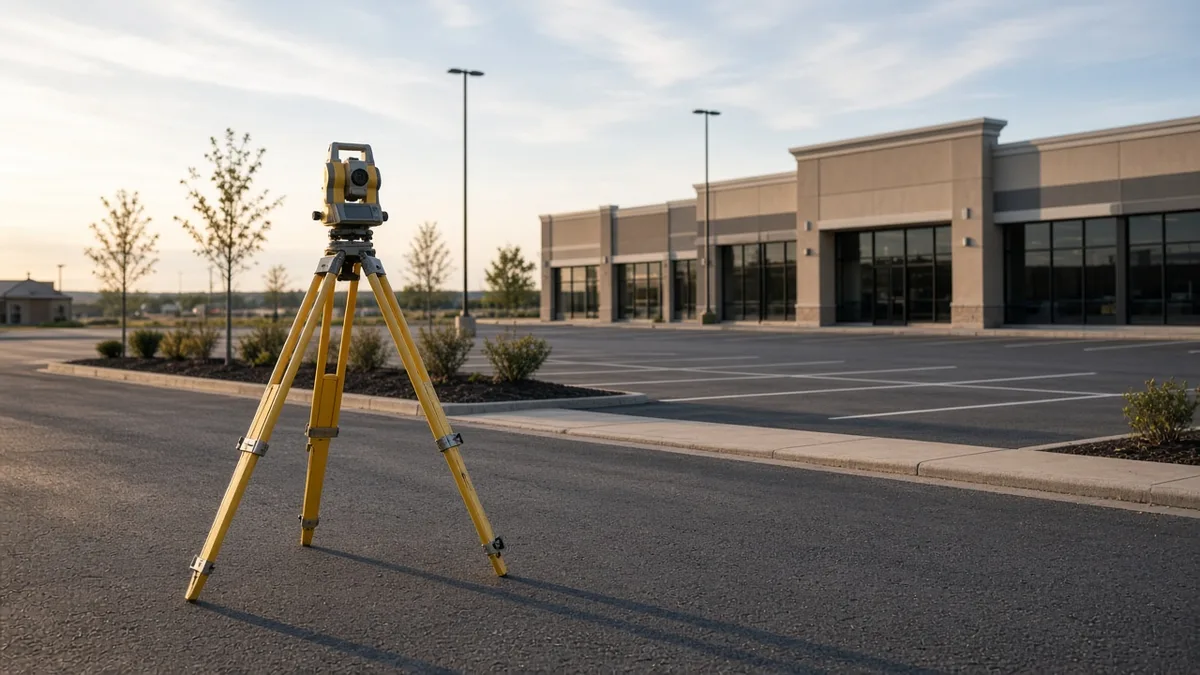
Commercial loan ALTA survey requirements are the checklist a leased building has to survive before title will insure the land the way the lender needs. The survey shows boundaries, improvements, easements, encroachments, and access on one plat, tied to the title commitment. A pretty rent roll does not cure a building that sits in an easement, a parking lot that sits on the neighbor’s parcel, or a driveway the title policy will not insure. Those facts stall closings because they are title facts, and leased income depends on the tenant still being able to use the premises.
Illustrations are not a rate quote and not an offer of credit. An inquiry is not an approval.
Which commercial loan ALTA survey requirements stall a close
The ALTA/NSPS land title survey standards exist so the owner, the title insurer, the lender, and the surveyor are looking at the same minimum product. The standards call for fieldwork, a plat that relates that fieldwork to the documents, optional items the client specifically orders, and a certification. They are aimed at the matters that affect insurable title: boundaries, easements, encroachments, and access. A mortgage survey or a boundary sketch can be cheaper and still be the wrong document for this loan. If the commitment asks for an ALTA/NSPS land title survey, that is the product to order.
What actually stops a leased-asset closing is usually one of a few mismatches between the lease, the commitment, and the ground.
An encroachment. A wall, canopy, fence, or parking lot crosses the boundary, or an improvement sits inside a recorded easement. The plat shows it. Title then takes a survey exception, or it refuses to insure over the encroachment. Lenders who need that coverage will not fund through the exception. The cure is an encroachment agreement, a lot-line adjustment, a removal, or a decision to live with a policy the lender has already rejected. Each cure has a clock. Rate locks and tenant delivery dates do not wait politely. Order the survey when the commitment draft exists, not in the week everyone hoped to fund.
Access that is not insurable. The parcel does not touch a public street, and the driveway depends on an easement that is missing, expired, ambiguous, or limited to a person who is not your borrower. A lease that promises customers a way in does not create a right title will insure. Access is a title insurance question first and a paving question second. If the easement is there, the survey should show the path and the plat should match the book and page in the commitment. A gravel drive that has been used for years is evidence of use. It is not, by itself, the insured access.
Parking or common area on the wrong parcel. Retail and office leases often grant a number of spaces or a right to a drive aisle. The survey then shows those stripes on a parcel the seller is keeping, or on a neighbor’s land with no recorded reciprocal agreement. The rent was underwritten as if the parking were part of the collateral. The collateral is whatever the mortgage describes. Illustration: a lease grants the use of a full field of spaces, and the survey shows only half of them on the insured lot. The close waits on a recorded easement, a rewritten lease, or a price that reflects the smaller collateral. None of those are a one-day fix.
An easement through the improvement. A utility easement, a drainage easement, or a shared-access easement plotted from the commitment runs under the building or through the only drive aisle. The tenant is in possession. The easement holder may still have a right that conflicts with that possession. The survey is how you see the conflict before the policy is written around it. Curing it may mean relocating the easement, obtaining a consent, or accepting an exception the lender will not accept. Find out which one while the inspection period is open.
Descriptions that are not the same land. The lease, the purchase contract, the title commitment, and the survey have to describe one parcel. Suite numbers, “together with” parking tracts, and exceptions for outparcels are where these drift. A SNDA subordinates the lease and gives the tenant and the lender a direct agreement, and it cannot repair a legal description that points at the wrong dirt. Title insurance requirements are the policy side of the same problem. The survey is what lets the insurer decide which survey matters to accept and which to except.
Table A, and the items people forget to check
The base standards are the minimum. Optional items are ordered one by one. If you do not request them, the plat can be silent on zoning, on the number of parking spaces, or on underground utilities. Silence is not a finding that those things are fine. It is a finding that nobody asked.
For a leased building, the optional items that most often earn their cost are the ones that tie the lease to the ground: parking spaces the lease grants, the location of improvements a tenant added, and any appurtenant easement the access depends on. Underground utilities matter when a tenant’s equipment or a planned repair would sit on top of them. Zoning evidence matters when the lease use and the legal use might disagree. You are not trying to collect every optional item by habit. You are trying to make the plat answer the promises in the lease.
Due diligence should put the survey on the early list, beside the commitment, not after the estoppels. A Phase I environmental report asks how the land was used and whether contamination is a concern. The survey asks where the lines, the easements, and the improvements are. They are different vendors and different stalls. A clean environmental report does not move a canopy off a property line.
Tenant work is a frequent surprise. A prior tenant builds a patio, a cooler pad, or a sign footing that crosses the line, and the landlord discovers it when the buyer’s survey comes back. Possession by the tenant does not move the boundary. The encroachment is still a title problem at the landlord’s loan closing. Look at recent tenant improvements with that in mind, before the surveyor is the first person to mention them.
A practical order of work
- Get a title commitment, including copies of the easement documents, as early as the contract allows.
- Send that commitment to the surveyor and order an ALTA/NSPS land title survey, with the optional items that match the lease.
- Read the plat against the lease’s premises, parking, and access language. Mark every “together with” and every shared drive.
- Send exceptions and encroachments to title and to the lender’s counsel while cure is still possible.
- Do not schedule the funding week until the survey exceptions the lender cares about are either insured over or cured.
Commercial loan ALTA survey requirements feel like a vendor task until an exception sits on the commitment and the tenant is waiting to open. The rent is not in doubt in that moment. The land the rent depends on is. Buyers who read the plat in the first half of diligence either cure the encroachment or renegotiate while they still have leverage. Buyers who read it at the end pay for an extension, or they fund a problem they now understand too well to like.
Have a commercial or mixed-use investment property in mind? Start with a confidential inquiry or call (907) 841-1600.
Frequently Asked Questions
Is a boundary survey enough for a commercial loan?
A boundary survey can locate lines and corners. An ALTA/NSPS land title survey is the product written so title and the lender can see easements, encroachments, access, and the improvements together, certified to the parties who need to rely on it. If the commitment or the lender asks for that survey, a boundary sketch leaves the file short, so order the product the closing actually uses.
What is Table A on an ALTA survey?
Table A is the list of optional items added only when the client requests them, such as zoning, parking counts, and underground utilities. The base survey does not silently include every optional item. If the lease depends on a fact that lives in Table A, check that item when you order the work. A silent plat means the question was not asked.
Will an encroachment always stop the closing?
It stops the closing when title will not insure over it and the lender will not take the exception. Some encroachments are cured with an agreement, a removal, or a lot-line change, and the loan funds after the cure. Others are unacceptable to the holder of the note no matter the rent. The survey’s job is to reveal the fact early enough that you still have those choices.
Who should order the survey?
The buyer usually orders it, because the buyer and the lender need to rely on the certification. The seller’s old survey can be a head start and can also be stale, certified to someone else, or silent on a later tenant improvement. Have the new survey tied to the current title commitment. A survey that predates the commitment will miss easements recorded after it.
Can a tenant’s long possession fix a missing access easement?
Possession explains how people have been reaching the building. Insured access comes from a recorded right that title will cover, from the public street to the parcel. Years of use can support a legal claim in some cases, and that claim is not the same thing as a policy exception the lender will accept this month. Put the easement on record, or expect the survey and the commitment to keep flagging the driveway.
Have a property in mind?
Submit a confidential inquiry — business-purpose and investment property only.
Start InquiryDisclaimer: This article is for informational purposes only and does not constitute financial, lending, legal, or tax advice. Commercial & DSCR Loans is a marketing and referral information service — not a lender, broker, or financial institution. Content relates to business-purpose and investment property financing only. Disclaimer · Terms · Privacy