SBA 504 Loan for an Existing Building
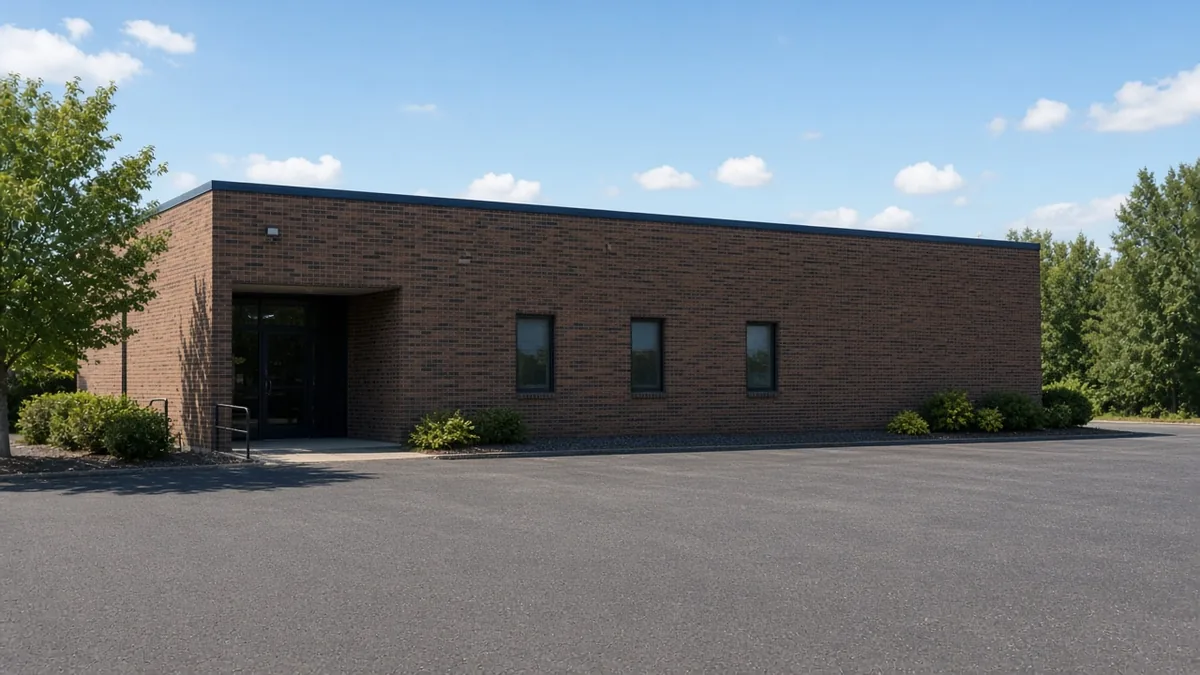
An SBA 504 loan for an existing building is long-term financing so an operating business can buy a building that is already standing and occupy it. The SBA 504 loan page describes the program as fixed-rate financing for major fixed assets that promote business growth and job creation. Certified Development Companies, the nonprofit partners SBA authorizes, originate the 504 piece together with a senior lender.
This page is the purchase of a building that already exists. A ground-up project is a different file. A loan whose purpose is speculation or investment in rental real estate is outside the program. The SBA 504 loan page lists that exclusion in plain language, next to working capital and inventory.
Illustrations below use round project costs so the split is easy to see. They are not a rate quote and not an offer of credit. An inquiry is not an approval.
What an SBA 504 loan for an existing building can buy
The business on the application has to be a for-profit operating business in the United States, small under SBA size rules, with a feasible plan and the ability to repay. SBA also says loans are not made to businesses engaged in nonprofit, passive, or speculative activities. A passive owner buying a leased building to hold as an investment is the use the program declines. The occupant is the operating company.
Eligible project costs on an existing building center on the purchase. Renovation of that same building can be included when the costs are eligible. Machinery and equipment with a remaining useful life of at least 10 years can ride along when they belong in the project. Working capital and inventory do not. Debt payoff is limited to debt that meets SBA’s definition of qualified debt. This page does not walk through a refinance. The question here is the building you are buying.
A land-only purchase is a different line on the application. If the asset you want is a finished building the business will use, keep the file on that building. Do not pad the project with uses the 504 page says are ineligible and hope the occupancy story carries them.
The CDC portion offers 10-year, 20-year, and 25-year maturities. SBA describes that rate as pegged to an increment above the current market rate for 10-year U.S. Treasury issues. The increment is set when the debenture is priced. Nothing on this page is a prediction of that price.
How the money is split
SBA’s description of a typical 504 project has three parts.
- A private lender takes a senior lien for up to 50 percent of the project cost.
- A CDC takes a junior lien for up to 40 percent, funded by a debenture that SBA guarantees.
- The borrower contributes at least 10 percent equity.
The third-party loan is at least as large as the 504 loan’s net proceeds. On SBA’s eligibility checklist, that senior loan has a term of at least 7 years when the debenture is 10 years, and at least 10 years when the debenture is 20 or 25 years. The borrower’s contribution is cash, or property that is part of the project, and it is not proceeds of an SBA business loan. If the contribution is borrowed, the checklist requires a reasonable rate, a lien subordinate to the 504 liens, and repayment no faster than the 504 loan.
Use a $1,000,000 project as arithmetic, not as a quote.
| Piece | Share on a standard file | Dollars on $1,000,000 |
|---|---|---|
| Senior lender | Up to 50% | $500,000 |
| CDC / 504 debenture | Up to 40% | $400,000 |
| Borrower equity | At least 10% | $100,000 |
Two add-ons show up often on an existing-building purchase. SBA’s checklist asks for an additional 5 percent borrower contribution, and caps the debenture at 35 percent, when the business has operated for two years or less, or when ownership of the applicant business is changing. It asks for another additional 5 percent, with the debenture capped at 35 percent, when the project is a limited or special-purpose property. When both conditions apply, the borrower contribution is at least 20 percent and the debenture finances no more than 30 percent. A later special-purpose project, when a special-purpose debenture is already outstanding, uses that same 20 percent contribution and 30 percent debenture cap. The checklist says the minimum contribution will not exceed 20 percent.
A business that has operated for more than two years, buying a general-purpose building it will occupy, is the 10 percent column. A newer company buying its first building is the 15 percent column. A narrow building plus a new company is the 20 percent column. The CDC, not a blog table, decides which column your project is in.
Occupancy is the eligibility test
For the purchase, renovation, or reconstruction of an existing building, SBA’s eligibility checklist requires the applicant or its operating companies to occupy at least 51 percent of the rentable property. Loan proceeds are not used to remodel space the applicant does not occupy. The rest of the building can have other tenants only inside that occupancy test. A building you will mostly operate from can include some third-party tenants. A building you are buying so other people will be the tenants is the rental-investment use the 504 page excludes.
That 51 percent test is why this file feels different from a DSCR rental loan. A DSCR rental file qualifies an investment property from rent and the payment, and the borrower does not have to run an operating company inside the building. A 504 file requires the operating business, the occupancy, and the job-creation or community-development purpose the program is built around. Mixing the two stories on one application is how files stall. If the intent is a leased investment with no operating occupant, read owner-occupied versus investment commercial and stay on an investment product. The checklist for a conventional commercial file lives on commercial property loan requirements.
Title is usually taken by the operating company or by a real-estate holding company that leases to the operating company when SBA accepts that structure. Either way, the operating company is the occupant the 51 percent test measures. A stack of unrelated leases, with the applicant in a back office, does not meet the test.
What to gather before you talk to a CDC
504 loans are available through Certified Development Companies. SBA tells borrowers to find a CDC or a local SBA office rather than treat the program as a direct application to the agency. The CDC is the party that knows which eligibility box the project has to check.
Have these pieces in one folder before that conversation.
- A purchase contract on a building that is already standing, with a price you can support.
- A simple plan of who will occupy which square feet, adding to at least 51 percent for the operating company.
- Evidence of how long the business has operated, because two years is the line on the extra equity.
- The source of the equity injection, and whether any of it is borrowed.
- A use of proceeds that stays on the building, eligible soft costs, and any eligible equipment. Leave working capital off the 504 side.
The senior lender and the CDC underwrite the same project from two liens. A yes from one of them is not a yes from the program. SBA still has to authorize the debenture. Character, size standards, and the business plan are part of that review. A complete folder shortens the conversation. It does not create an approval.
Have a commercial or mixed-use property in mind? Start with a confidential inquiry or call (907) 841-1600.
Frequently Asked Questions
Can an SBA 504 loan for an existing building buy a rental I will not occupy?
SBA’s 504 page says the loan cannot be used for speculation or investment in rental real estate. The occupancy checklist for an existing building requires the applicant or its operating companies to occupy at least 51 percent of the rentable property. A passive hold, leased entirely to other businesses, fails that test. The program is for an operating business that will use the building.
Is a ground-up building the same 504 request?
This page is a building that is already standing. SBA’s materials also discuss construction, and a ground-up project has its own occupancy and draw rules. Bring a purchase contract for an existing building if that is the asset. Do not describe a plan to build from a vacant site and expect this checklist to cover it.
How much cash does the business have to put in?
On a standard project the borrower contribution is at least 10 percent, with a senior loan up to 50 percent and a CDC loan up to 40 percent. SBA’s checklist adds 5 percent when the business has operated for two years or less or ownership of the applicant is changing, and another 5 percent for a limited or special-purpose property. Both conditions together mean at least 20 percent from the borrower.
Can the 504 proceeds include inventory or payroll?
The 504 page says the loan cannot be used for working capital or inventory. The existing-building proceeds belong on the real estate and other eligible fixed assets. Payroll, stock, and a general cash reserve are operating needs. They are not the 504 project.
Who actually closes the loan?
A CDC originates the 504 piece with a senior lender. The senior lender holds the first lien. The CDC holds the junior lien, funded by the debenture. SBA’s role is the guarantee of that debenture and the program rules, not a promise that a particular business will be approved. Start with a CDC that handles 504 loans in the project’s area.
Have a property in mind?
Submit a confidential inquiry — business-purpose and investment property only.
Start InquiryDisclaimer: This article is for informational purposes only and does not constitute financial, lending, legal, or tax advice. Commercial & DSCR Loans is a marketing and referral information service — not a lender, broker, or financial institution. Content relates to business-purpose and investment property financing only. Disclaimer · Terms · Privacy