Non-Warrantable Condo DSCR Loan Guide
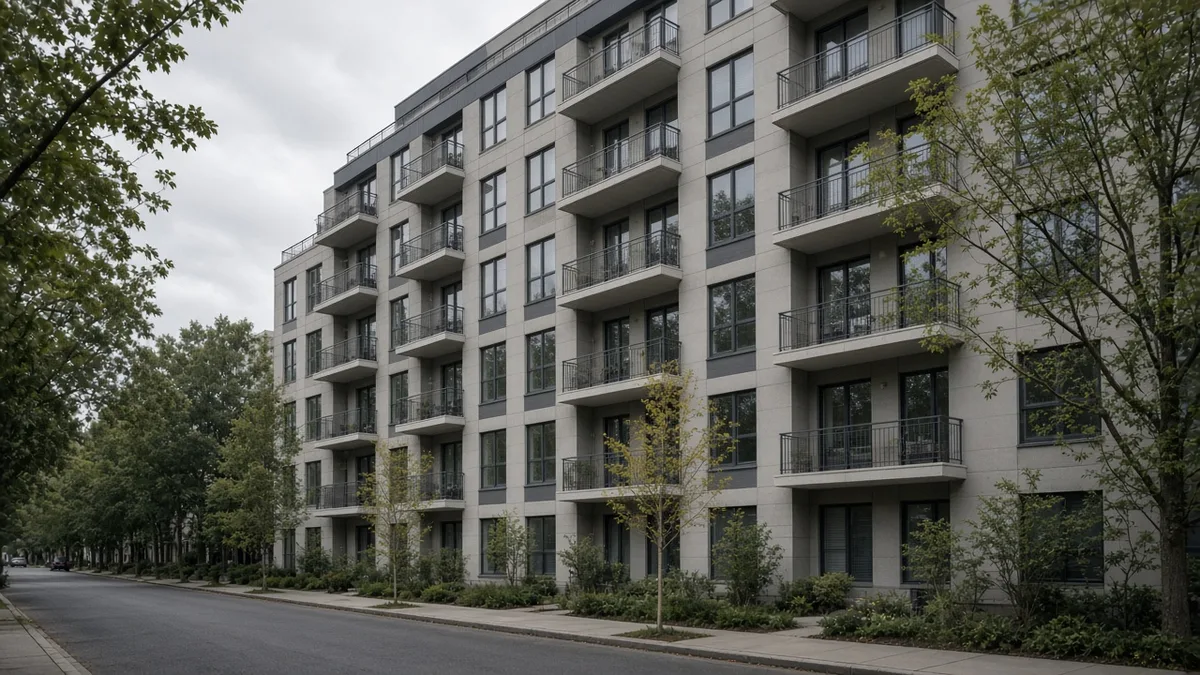
A non-warrantable condo DSCR loan is a business-purpose mortgage on an investment condominium whose project misses one or more of the tests that make a project “warrantable.” Those tests usually cover how many units are rentals, whether the association is in litigation, and whether the building operates like a hotel. Failing a test does not write the loan by itself. It means an agency-style project approval is the wrong benchmark, and a rental file has to apply its own overlays. Many files will still pass. Many will stop. The ratio on your unit does not vote for the building.
This article is about a unit you will rent out. It is not a primary-home condominium guide, and it is not an application for mortgage insurance.
Illustrations here are not a rate quote and not an offer of credit. An inquiry is not an approval.
When a non-warrantable condo DSCR loan gets reviewed
Warrantable, in plain language, means the project would pass a formal project review: owner-occupancy or a rental cap, litigation, commercial space, hotel-style operation, association reserves, and delinquency. Non-warrantable means at least one of those failed, or nobody wants to pretend they passed. Investors meet this most often in buildings that are already full of rentals, in buildings fighting a defect suit, and in condotels with a front desk.
HUD’s condominium mortgage insurance page is a useful public picture of how seriously project facts are taken in an insured program. Project approval there looks at insurance, financial condition, title, pending legal action, and physical condition. The single-unit path on that page also looks at owner-occupancy percentage and the project’s finances. That framework insures condominium mortgages. A DSCR rental file is a different product. The overlap is the questionnaire, not the decision. Litigation, occupancy mix, and the health of the association show up in both rooms. The answers are allowed to differ.
Condo investment property financing, when the project is warrantable, is the cleaner version of the same asset. Read that piece for the ordinary case. Stay here when the project questionnaire has a problem.
Three overlays decide most of the hard files.
Rental cap
A rental cap is a ceiling on investor-owned or rented units, or a floor on owner-occupants. A building that is 70 percent rented can fail a test written for a mostly owner-occupied project. The buyer who wants a DSCR loan is adding another rental, or replacing one, so the cap is not a technicality. It is the building’s actual use.
Some business-purpose files will review a high investor concentration anyway. They often answer with a lower maximum loan-to-value, a full association questionnaire, and a closer look at reserves and delinquency. Others stop at a stated rental percentage. Ask for the cutoff before you pay for an appraisal. A leasing restriction in the condo documents can be stricter than the lender’s cap. If the declarations limit or forbid rentals, the association can block the tenant even when a lender would have allowed the loan. Read the declarations. A friendly listing agent is not the restriction.
Single-entity ownership is the cousin of the rental cap. One owner holding a large share of the units concentrates both the votes and the vacancy. Files often want that percentage disclosed even when they allow investor-heavy buildings.
Litigation
Pending litigation is the overlay that stops otherwise attractive units. A defect suit, a structural claim, or an association that is suing the developer raises the question of who pays for the repair and whether a special assessment is coming. A small insured claim that is clearly covered is a different fact from an open structural case with thin reserves.
What a reviewer often wants is the complaint, the association’s letter describing the case, the insurance position, and the budget. “My agent says it’s nothing” is not one of those documents. Settled litigation with a completed repair can be reviewable. Active litigation about the building’s bones often is not. Budget a no as a real outcome, and keep the earnest money clock in mind. Earnest money and financing timelines are how this overlay becomes a forfeited deposit.
Hotel-condo overlays
A hotel-condo, sometimes called a condotel, has a front desk, a rental program, or a pooling arrangement that makes the unit behave like a hotel room. Nightly occupancy, required management, and shared revenue are the clues. Some DSCR files exclude that setup. Others review it as a short-term rental with different insurance, different reserves, and a project questionnaire aimed at the rental program.
Short-term rental DSCR and a DSCR loan for an overnight rental explain the income side. The project side is additional. A unit you personally list for weekends, inside an ordinary condo that allows rentals, is not automatically a hotel-condo. A unit that must sit in the building’s rental pool often is. The declarations and the management contract tell you which one you are buying. Insurance has to match. A landlord policy written for a one-year tenant can be rejected on a nightly rental, and the premium that replaces it belongs in the payment.
The ratio still has to work
Project approval and coverage are separate gates. Association dues are inside the payment, so they hit the ratio directly. HOA dues in the DSCR ratio walks through that arithmetic. Here is an illustration.
Monthly rent $2,100. Principal and interest $1,150. Taxes and insurance $280. Association dues $420. PITIA is $1,150 + $280 + $420 = $1,850. Coverage is $2,100 ÷ $1,850 = 1.14. That 1.14 may or may not meet a given file. It does nothing about a lawsuit or a rental cap. A beautiful ratio on a unit in a litigating hotel-condo is still a unit in a litigating hotel-condo.
Dues also hide special assessments. A one-time assessment for a roof is cash, and a long assessment can be treated like a higher due. Ask for the budget, the reserve balance, and the last two years of meeting minutes if you can get them. A low monthly due with empty reserves is a future assessment wearing a small number.
What to collect before you write the offer
- The condo questionnaire, or the association’s answers on owner-occupancy, single-entity ownership, delinquency, reserves, insurance, and litigation.
- The declarations, bylaws, and any rental or leasing policy.
- The budget and the current reserve balance.
- If a rental program exists, the contract that says whether participation is mandatory.
- A landlord or short-term insurance quote that matches how you will actually rent the unit.
Then run the ratio with the real dues and the real insurance. If the questionnaire is already a no for the files you can use, a lower offer does not fix litigation. It only changes the price of a unit you still cannot finance. Walk, or bring a financing plan that does not depend on a project waiver you have not seen in writing.
A non-warrantable label is a description of the project, not a marketing category you can count on. Some investment files review rental-heavy buildings every week. Few of them are casual about open structural litigation or a mandatory hotel pool. Sort those three overlays first, then spend money on the appraisal.
Exploring DSCR financing for an investment rental? Submit a confidential inquiry or call (907) 841-1600.
Frequently Asked Questions
Does non-warrantable mean the DSCR loan is declined?
It means the project missed a test that warrantable files use, often the rental share, a lawsuit, or a hotel-style operation. Some business-purpose files will still review an investment unit, frequently at lower leverage and with a full questionnaire. Others will not. The word is a project fact, not an approval and not an automatic denial.
What is a rental cap on a condo project?
A rental cap limits how many units may be rented, or it requires a minimum share of owner-occupants. A building full of investors can fail that test. A DSCR buyer is usually adding a rental, so the current percentage matters more than the buyer’s own credit. The condo declarations can impose a tighter rental limit than any lender overlay.
Are hotel-condos underwritten like a standard investment condo?
Often they are not. A front desk, a mandatory rental program, or pooled revenue can push the unit into a short-term or condotel overlay, and some files will not take that overlay at all. A condo you rent out yourself, under rules that allow ordinary leasing, is a different fact pattern. Read the management contract before you assume the rents are freely yours.
Does an insured condo project approval replace a DSCR review?
Insured project approval is a mortgage-insurance framework. It looks at litigation, finances, title, condition, and, on some paths, owner-occupancy. A business-purpose DSCR file can ask similar questions and reach a different answer. Passing one does not complete the other, and failing one does not, by itself, decide the rental file.
Do association dues change the coverage ratio?
Yes. Dues are part of the monthly housing payment in the usual rental ratio, along with principal, interest, taxes, and insurance. A high due can pull a strong rent down to a thin ratio, and special assessments may add still more cash. The project questionnaire does not replace that math, and the math does not cure a project problem.
Have a property in mind?
Submit a confidential inquiry — business-purpose and investment property only.
Start InquiryDisclaimer: This article is for informational purposes only and does not constitute financial, lending, legal, or tax advice. Commercial & DSCR Loans is a marketing and referral information service — not a lender, broker, or financial institution. Content relates to business-purpose and investment property financing only. Disclaimer · Terms · Privacy