Is Rental Income Subject to Self-Employment Tax?
Is rental income subject to self-employment tax? For a typical lease of real estate, no. The instructions for Schedule SE list income from real estate rentals as excluded from net earnings from self-employment when you did not receive that income in the course of a trade or business as a real estate dealer. You report that rent on Schedule E. The same instructions pull a different stream of payments back in: payments for rooms or other space when you also provide substantial services for the convenience of the tenants. Hotels, boarding houses, and similar operations are the examples. The lease in your drawer is one of those two patterns, and the services you actually perform decide which.
Illustrations here are not a rate quote and not an offer of credit. An inquiry is not an approval.
Is Rental Income Subject to Self-Employment Tax on an Ordinary Lease
IRS Topic 414 matches the schedule choice to the services. You generally use Schedule E to report income and expenses from real estate rentals. If you provide substantial services that are primarily for your tenant’s convenience, you report income and expenses on Schedule C. Schedule E is the rental form. Schedule C is the trade-or-business form that feeds self-employment tax when the earnings belong there. Picking the form is the tax consequence. It is not a branding choice.
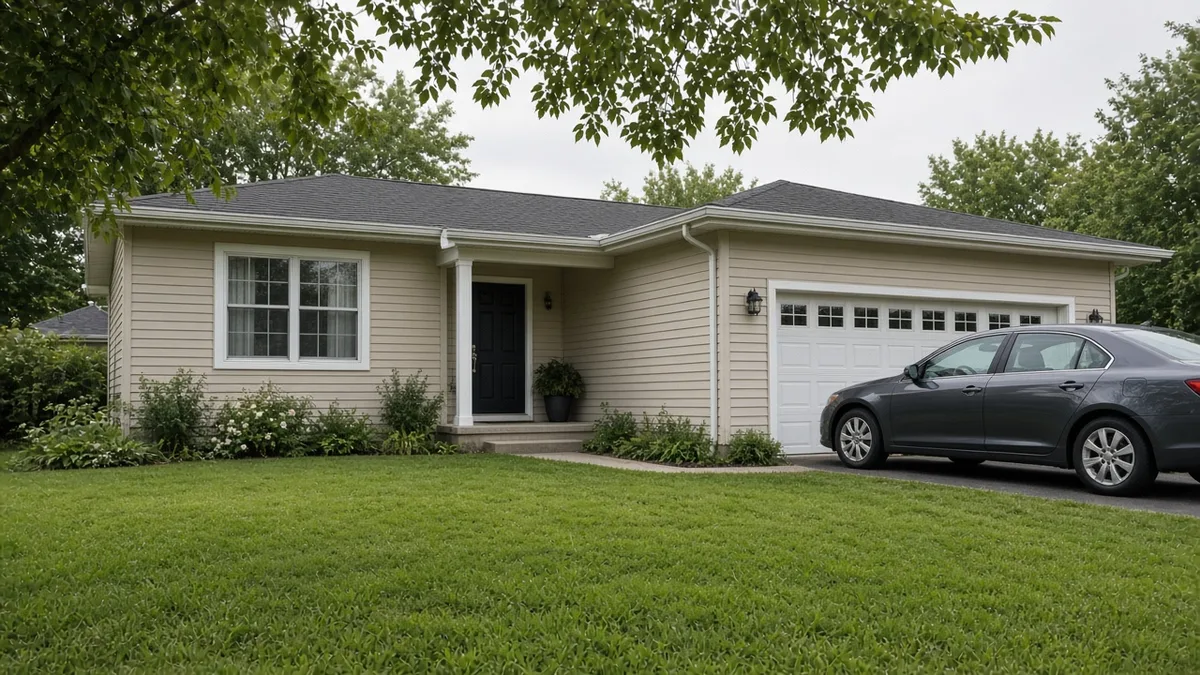
An ordinary residential lease looks like Schedule E. You provide a dwelling. The tenant pays rent. You keep the building habitable: the roof, the heat, the repairs the lease assigns to you. Topic 414 treats repair costs and operating expenses as rental expenses deducted against rental income. That maintenance is part of being a landlord. It is not, by itself, the “substantial services primarily for your tenant’s convenience” that move the activity to Schedule C. The Schedule SE instructions point to hotels, boarding houses, tourist camps or homes, trailer parks, parking lots, warehouses, and storage garages as examples of space rented together with substantial services. A house on a twelve-month lease, where the tenant lives without daily services from you, is the real-estate-rental case the instructions tell you to put on Schedule E and leave off Schedule SE.
A real estate dealer is the explicit exception inside the exclusion. The Schedule SE instructions withhold the exclusion when you receive the rent in the course of a trade or business as a real estate dealer. A dealer holds property primarily for sale to customers. Rent you collect on property you hold to rent, and not as inventory for sale, is the Schedule E fact pattern. If you are in the business of selling properties to customers and the rent is received inside that business, the exclusion the instructions describe does not apply. Owning several rentals does not, by itself, make you a dealer. Selling as your trade, with property as the product, is the different fact.
Spouses who elect qualified joint venture status for a rental real estate business still generally stay off self-employment tax. The Schedule SE instructions say that income generally is not subject to self-employment tax. You check the qualified-joint-venture box on Schedule E. You do not file Schedule SE unless you have other income that is subject to the tax. The instructions point to one exception: the substantial-services case, item 3 in the list of earnings that are included. Electing the joint venture does not convert hotel-style services into excluded rent, and it does not convert excluded rent into self-employment earnings.
Farm rent is a separate exception, and it is easy to drag into a residential conversation by mistake. The instructions include, in self-employment earnings, rental income from a farm if as landlord you materially participated in the production or management of production of farm products on that land. They exclude farm rent, including crop shares, when you did not materially participate. That test is about farming. A leased house or a small commercial building is not a farm participation case. If the dirt is in production and you are in the management of that production, use the farm rules, not this lease analysis.
Services That Pull Rent Onto Schedule C
Substantial services for the tenant’s convenience are the line that moves money. The Schedule SE examples are operations where the payment is partly for the room and partly for what you do for the occupant: a hotel, a boarding house, a tourist home. Topic 414 uses the same idea and sends those activities to Schedule C. The more the tenant is buying your daily work, the weaker the “this is just rent” position.
Short stays are where residential investors hit the line. Changing linens, supplying toiletries, running a front desk, and providing services a guest expects at an inn can look like the hotel example. A one-week furnished stay is not automatically a hotel. It is also not automatically a Schedule E lease because you called it rent. Compare what you provide with the examples in the Schedule SE instructions. Short-term versus long-term rental operations is the operating contrast. The tax contrast is whether the services are substantial and primarily for the occupant’s convenience.
Ordinary turn work between long-term tenants stays on the landlord side of the line in a normal case. Paint, a lock change, and a repair call so the next tenant can move into a habitable house are the rental expenses Topic 414 describes. They are not a concierge. Write down what you actually do in a month. If the list looks like an inn, stop relying on the real-estate exclusion. If the list looks like a lease, Schedule E is the form the instructions name.
Parking lots, warehouses, and storage garages are on the IRS example list because services can be bound up with the charge for the space. A triple-net lease of a warehouse, where the tenant operates and you collect rent, is a different file from a lot you staff. Read the services, not the word “rent” on the invoice.
What This Test Does Not Decide
Self-employment tax is not the passive-loss test. Real estate professional status is about whether rental losses are passive. It uses different rules and a different form. It does not, by itself, answer whether the rent is net earnings from self-employment. Real estate professional status is that other question. Passing it or failing it does not move an ordinary lease from Schedule E onto Schedule SE.
A qualified business income deduction is also a different question. It is not self-employment tax, and this page does not compute it. The QBI deduction on a rental is where that deduction is discussed. You can have Schedule E rent that is outside self-employment tax and still have a separate deduction analysis. Do not treat one answer as the other.
Entity choice does not flip the statute. Holding the lease inside an LLC does not, by itself, turn excluded real-estate rent into self-employment earnings. The Schedule SE instructions look at the kind of income: real estate rent outside a dealer business, versus payments for space plus substantial services. An S corporation versus an LLC for a rental changes entity tax in ways that article covers. It is not a switch that imposes self-employment tax on ordinary rent or removes it from hotel-style services. If you are a partner, the Schedule SE instructions tell you to pick up the net earnings from self-employment reported on your Schedule K-1. Read box 14. Do not assume a K-1 from a rental partnership is self-employment earnings, and do not assume it is not, without looking at what the partnership reported and why.
Topic 414 also notes that a rental profit may be subject to the net investment income tax. That is another tax, with its own topic, and it is not the self-employment tax this page is about. Excluding rent from self-employment earnings does not mean the rent is untaxed. It means the self-employment tax is not the tax that reaches an ordinary lease. Income tax still can. The investment-income tax might. Run those on their own instructions.
Ready to discuss business-purpose financing options for an investment property? Call (907) 841-1600 or use the contact form.
Frequently Asked Questions
Is rent from a long-term house subject to self-employment tax?
Usually no, when you did not receive the rent as a real estate dealer. The Schedule SE instructions exclude that real-estate rent from net earnings from self-employment and tell you to report it on Schedule E. Keeping the house habitable is a landlord expense, not the hotel-style services those instructions use as the exception.
When does rental activity move to Schedule C?
When you provide substantial services primarily for the tenant’s convenience. Topic 414 sends that activity to Schedule C. The Schedule SE instructions include payments for rooms or other space in that situation, and they name hotels, boarding houses, tourist homes, trailer parks, parking lots, warehouses, and storage garages. A furnished short stay that includes daily guest services belongs in that conversation.
Does a real estate dealer pay self-employment tax on rent?
The exclusion in the Schedule SE instructions does not apply to rent you receive in the course of a trade or business as a real estate dealer. A dealer is in the business of selling real estate to customers. Holding rental property to collect rent is the Schedule E pattern. The label on your business card matters less than whether the rent is received inside a sales business.
If my spouse and I elect a qualified joint venture, do we owe self-employment tax on the rent?
The instructions say that rental real estate income under that election generally is not subject to self-employment tax. You indicate the election on Schedule E and you do not file Schedule SE unless other income is subject to the tax. Substantial services for tenants’ convenience remain the exception the instructions flag.
Does real estate professional status decide this?
No. Professional status is about passive-loss limits, which is a different statute from the self-employment exclusion for real estate rent. A qualified business income deduction is a third question. Ordinary rent can sit on Schedule E, outside self-employment tax, while those other rules still apply on their own terms.
Have a property in mind?
Submit a confidential inquiry — business-purpose and investment property only.
Start InquiryDisclaimer: This article is for informational purposes only and does not constitute financial, lending, legal, or tax advice. Commercial & DSCR Loans is a marketing and referral information service — not a lender, broker, or financial institution. Content relates to business-purpose and investment property financing only. Disclaimer · Terms · Privacy