Financing a Fourplex Investment Property
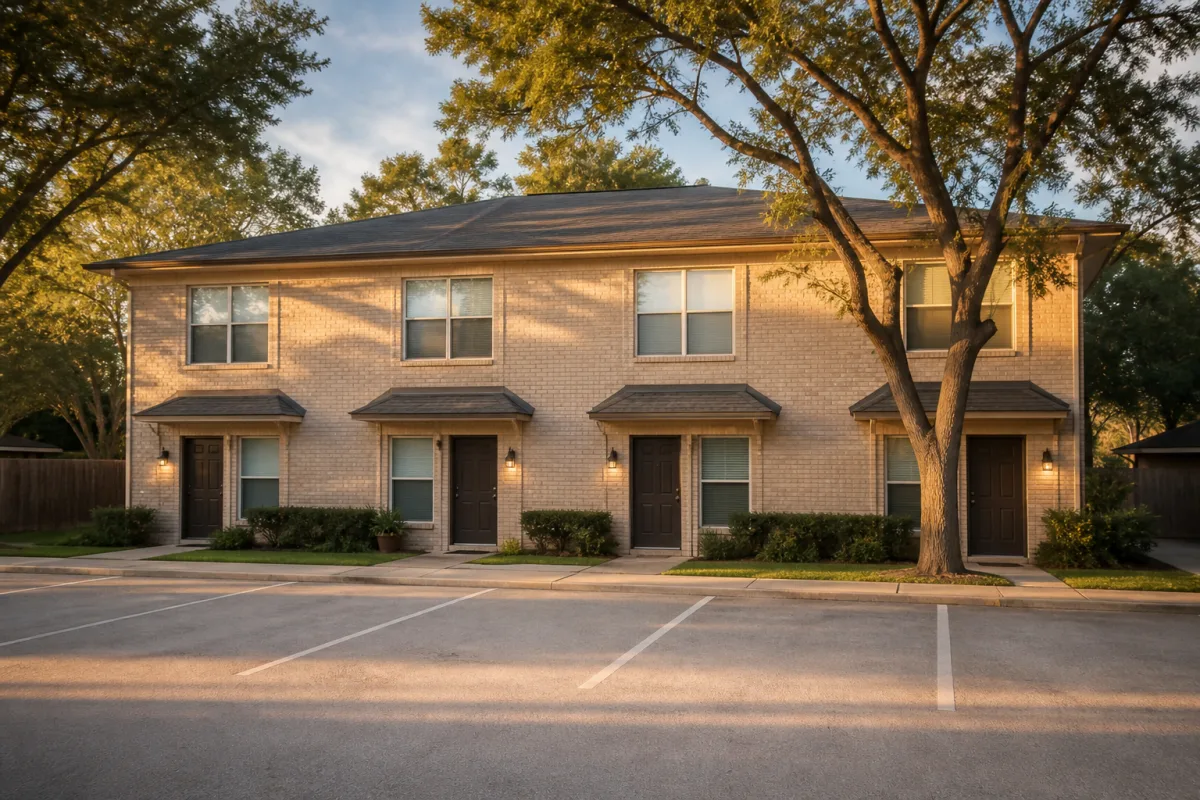
Financing a fourplex investment property often sits in a useful middle ground: four units can still fit many residential-style investment products, while the asset already behaves like small multifamily from a cash-flow and operations standpoint.
This guide covers how investors typically prepare, what underwriting conversations emphasize, and how DSCR-style business-purpose financing may fit a 4-unit rental—without treating an inquiry as an application.
Why fourplexes attract investors
A fourplex can diversify income across units, support economies of scale on insurance and maintenance, and still keep management complexity below larger commercial multifamily. Many operators treat a fourplex as a “bridge” asset between single-family rentals and 5+ unit buildings.
From a financing lens, the property’s stabilized rents, vacancy assumptions, and debt service usually matter more than personal W-2 income when the loan is framed as business-purpose investment financing. For a primer on cash-flow qualification, see What Is a DSCR Loan?.
DSCR and cash-flow framing for 4 units
Debt service coverage ratio (DSCR) is commonly expressed as:
DSCR = Gross rental income ÷ proposed debt service (often PITIA or a similar figure)
A ratio at or above a capital provider’s minimum suggests the rents may support the loan. Exact formulas, stress rents, and overlays vary. Fourplexes with strong rent rolls and documented leases (or market rents supported by appraisal) often present more cleanly than thinly rented assets.
Educational ranges you may hear in market conversations include DSCR thresholds around 1.0–1.25+ and loan-to-value (LTV) bands that tighten when cash flow or credit is weaker. Treat those as learning ranges, not promises.
What to prepare before you inquire
Investors who move faster usually gather:
- Rent roll — unit mix, current rents, lease end dates, vacancies
- Trailing income evidence — leases, deposits, or schedule of rents
- Operating expenses — taxes, insurance, HOA (if any), typical repairs
- Entity docs — if vesting in an LLC or other entity
- Reserves narrative — months of PITIA or liquidity you can document
- Experience summary — prior rentals owned/managed (helpful even on 1–4)
The U.S. Census Bureau’s housing data is a useful public backdrop when you compare local vacancy and rent trends against your underwriting assumptions (Census housing data).
Purchase vs refinance paths
Purchase: Focus on appraisal support for rents, down payment / LTV, and whether the property is already leased or will lease-up after closing. Lease-up risk can change how aggressively cash flow is counted.
Rate/term refinance: Useful when you want a longer amortization or different payment structure on a performing fourplex.
Cash-out refinance: Investors sometimes pull equity for reserves, renovations already completed, or the next acquisition—still under business-purpose rules. Cash-out availability depends on equity, DSCR, and overlays; nothing is guaranteed.
Fourplex vs small commercial multifamily
Four units often stay in residential investment product conversations. Cross into 5–8 unit multifamily financing and you frequently see commercial-leaning documentation, different appraisal approaches, and experienced-investor overlays. Knowing that boundary early helps you sequence portfolio growth without forcing the wrong product onto the wrong asset.
Common pitfalls on 4-unit deals
- Overstating market rents without lease or appraisal support
- Ignoring insurance and tax resets after purchase
- Underestimating vacancy on older buildings
- Mixing owner-occupied stories into a business-purpose inquiry (this site focuses on investment use)
- Assuming every fourplex qualifies the same way—condition, location, and rent documentation matter
Frequently Asked Questions
Can a first-time investor finance a fourplex with DSCR-style products?
Sometimes. Some paths are open to newer investors on 1–4 unit rentals when cash flow, credit, and reserves look solid. Requirements vary widely, so treat first-time eligibility as case-by-case—not automatic.
Do all four units need to be leased at closing?
Not always. Vacant or partially leased fourplexes may still be financeable, but underwriting often stresses market rents or applies vacancy/lease-up adjustments. Stronger documentation usually helps.
Is a fourplex considered commercial real estate?
In everyday investor language, people call it small multifamily. For many financing conversations, 1–4 units still sit in residential investment product categories, while 5+ units often shift toward commercial-style underwriting. Definitions and program boundaries vary by capital source.
What down payment should I expect on a fourplex investment loan?
Educational market ranges for investment LTVs commonly land well below owner-occupied residential norms—often implying larger down payments or equity. Exact LTV depends on DSCR, credit, property condition, and overlays. Ask for a review rather than assuming a fixed percentage.
Does submitting a form approve financing?
No. An inquiry on this site is an information request only. Any approval, pricing, or terms come later from a capital provider after their own process.
Ready to discuss business-purpose financing options for an investment fourplex? Call (907) 841-1600 or use the contact form.
Have a property in mind?
Submit a confidential inquiry — business-purpose and investment property only.
Start InquiryDisclaimer: This article is for informational purposes only and does not constitute financial, lending, legal, or tax advice. Commercial & DSCR Loans is a marketing and referral information service — not a lender, broker, or financial institution. Content relates to business-purpose and investment property financing only. Disclaimer · Terms · Privacy