Financing a Single-Family Rental Portfolio
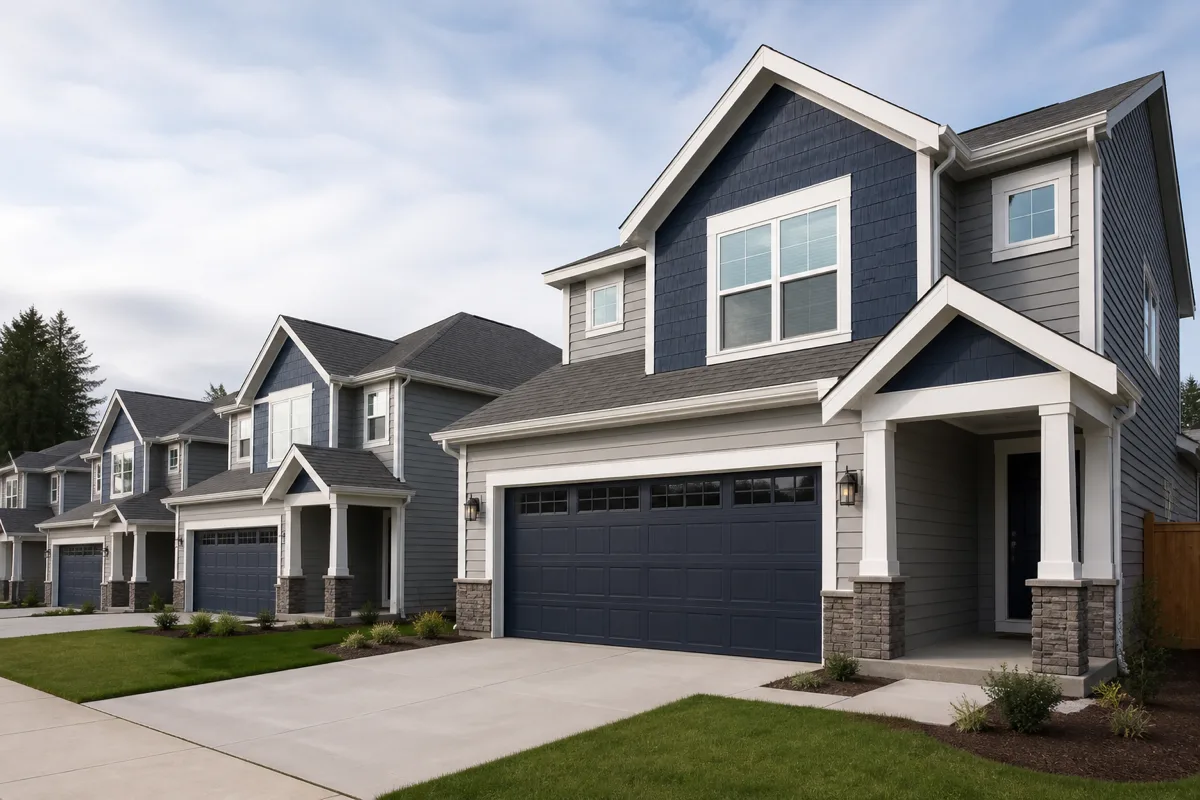
Financing a single-family rental portfolio typically evolves through two distinct stages as an investor scales: individual per-property loans in the early years, then a shift toward portfolio-level financing structures once the number of properties and total loan balance make that more efficient.
Neither approach is inherently better — the right structure depends on how many properties an investor holds, how uniform they are, and what the exit or refinance plan looks like.
Stage One: Individual Property Loans
Most investors start by financing each single-family rental separately, often through DSCR loans qualified on that specific property’s rental income. This approach has clear advantages early on:
- Simplicity — each loan stands on its own; a problem with one property doesn’t directly affect the others
- Flexibility to sell individually — no need to release collateral or restructure other loans if one property gets sold
- Easier to shop rate and terms per deal — each purchase can go to whichever capital source offers the best terms at that moment
The tradeoff is administrative overhead — more separate loan files, more individual closings, and potentially more total origination costs across many small transactions.
Stage Two: Portfolio (Blanket) Loans
Once an investor holds a meaningful number of stabilized single-family rentals — commonly somewhere in the range of five to ten or more — a portfolio loan (sometimes called a blanket loan) becomes worth evaluating. A single loan is secured by multiple properties at once, underwritten on the aggregate rental income and combined DSCR of the whole group rather than one property at a time.
Advantages of Portfolio Financing
- One closing instead of many — significant time and cost savings versus refinancing or acquiring properties one at a time
- Aggregate DSCR can smooth out weaker individual properties — a property with a slightly below-target DSCR can be offset by stronger performers in the pool
- Potential for better overall terms at scale, depending on the capital source and portfolio quality
Tradeoffs to Understand
- Cross-collateralization — properties in the pool typically secure the entire loan, meaning a default can put the whole portfolio at risk rather than just one asset
- Partial release complexity — selling a single property out of a blanket loan usually requires a partial release process, often with a paydown requirement and lender approval, rather than a simple standalone sale
- Underwriting depth — the lender reviews the entire pool’s leases, condition, and income, which takes longer than a single-property file
How Property Uniformity Affects Structure
Lenders offering portfolio loans typically want some consistency across the pool — similar property types (single-family, not mixed with commercial), similar geographic concentration or diversification strategy, and consistent occupancy/lease documentation across the group. A pool of ten scattered, inconsistent condition properties is harder to underwrite as a blanket loan than ten well-maintained rentals in a coherent target market.
Sequencing a Growing Portfolio
A common pattern investors follow:
- Early stage (1–4 properties): individual DSCR loans per property, focused on cash flow and learning the operating side of landlording
- Growth stage (5–15 properties): mix of individual loans and selective portfolio refinancing as properties stabilize and cross-collateralization tradeoffs become worth the efficiency gain
- Scale stage (15+ properties): portfolio-level financing becomes more standard, sometimes layered with entity-level lines of credit against portfolio equity for future acquisitions
Refinancing Existing Properties Into a Portfolio Structure
Investors don’t have to wait for new acquisitions to consider portfolio financing — a common move is refinancing a group of already-owned, individually financed rentals into a single blanket loan once the portfolio reaches sufficient scale. This can consolidate multiple monthly payments into one, potentially free up equity across the group for further acquisitions through a portfolio-level cash-out refinance, and simplify servicing and accounting going forward.
The tradeoff, as with any refinance, is closing costs on the new blanket loan and the cross-collateralization risk discussed above — a decision best evaluated against the specific administrative and financial benefit for that investor’s situation, not assumed to be automatically worthwhile at any scale.
Frequently Asked Questions
At what portfolio size does a blanket loan make sense?
There’s no fixed threshold, but the efficiency gains of a single closing typically become more compelling once an investor holds enough properties that refinancing or acquiring them one at a time creates meaningful administrative drag — often cited informally in the five-to-ten-property range, though it depends on loan size and lender minimums.
Can I mix single-family and small multifamily properties in one portfolio loan?
Some capital sources allow mixed property types within a portfolio loan; others prefer more uniform pools. Confirm eligibility for the specific property mix before assuming a blanket structure will work.
What happens if I want to sell one property from a blanket loan?
Most blanket loans include a partial release provision allowing an individual property to be sold and removed from the collateral pool, typically requiring a paydown of a portion of the loan balance and lender approval.
Is portfolio financing riskier than individual property loans?
Cross-collateralization means a serious problem with one property (or a broader market downturn hitting several properties at once) can affect the entire pool, whereas individual loans isolate risk per property. It’s a tradeoff between efficiency and risk concentration, not a strictly “riskier” or “safer” choice.
Do portfolio loans use the same DSCR formula as individual loans?
Yes, conceptually — aggregate rental income across the pool is compared to aggregate debt service, though the specific methodology can vary by capital source when weaker and stronger properties are blended together.
For broader research on institutional and portfolio single-family rental trends, see the Urban Institute’s Housing Finance Policy Center research on single-family rentals.
Ready to discuss business-purpose financing options for an investment property? Call (907) 841-1600 or use the contact form.
Related reading: Portfolio DSCR Loans for Multi-Property Investors, Build a Rental Property Portfolio: Sequencing, Scaling from 1-4 Units to Multifamily
Have a property in mind?
Submit a confidential inquiry — business-purpose and investment property only.
Start InquiryDisclaimer: This article is for informational purposes only and does not constitute financial, lending, legal, or tax advice. Commercial & DSCR Loans is a marketing and referral information service — not a lender, broker, or financial institution. Content relates to business-purpose and investment property financing only. Disclaimer · Terms · Privacy