Commercial Loan Property Condition Assessment
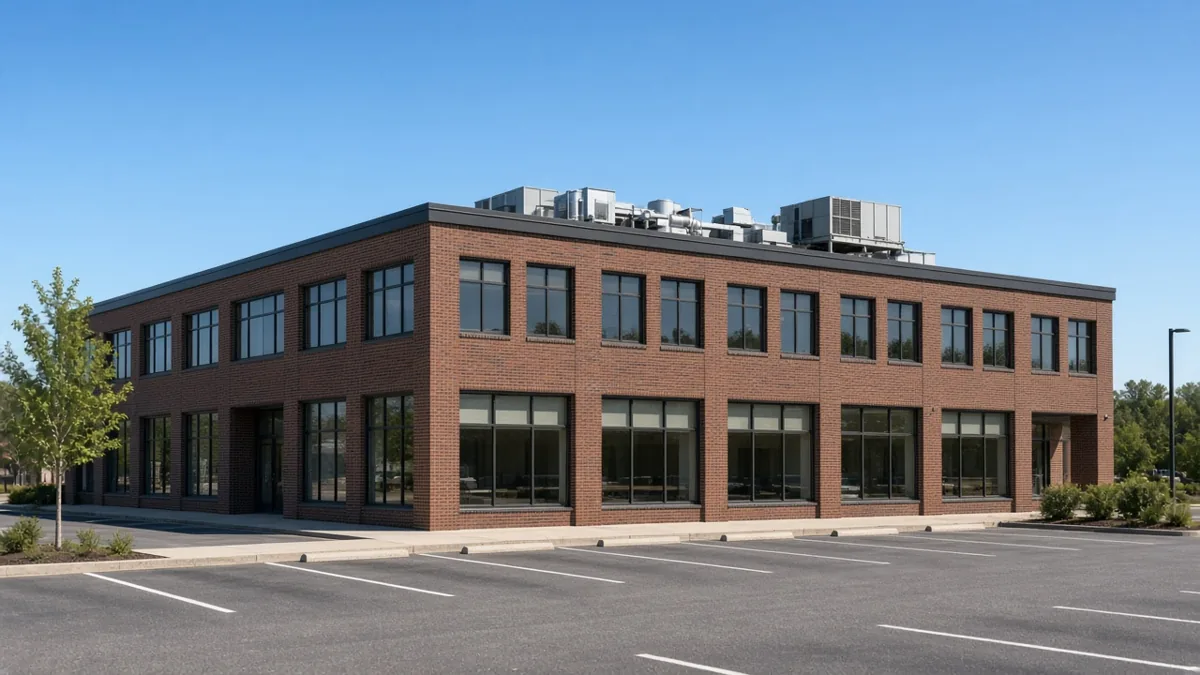
A commercial loan property condition assessment is a written look at an existing commercial building for a loan file. The consultant walks the property, reviews documents, talks with someone who knows the building, and lists physical deficiencies with opinions of cost. Immediate repairs and longer-term replacements come out of that list. The loan uses the list to decide what must be fixed, what must be escrowed, and what should be funded over time as a reserve.
House buyers often order a home inspection. That assignment is scoped for a residence and a purchase decision. A commercial loan orders a property condition assessment scoped for income property: site, structure, envelope, roof, HVAC, plumbing, electrical, interiors, and life safety, written so a credit file can price the future. The two reports can both be careful. They are ordered for different buildings and different decisions.
ASTM E2018, the Standard Guide for Property Condition Assessments: Baseline Property Condition Assessment Process, is the guide many commercial files name when they order this work. The guide frames a walk-through of the primary improvements, document review, interviews, and a property condition report that identifies material physical deficiencies and includes opinions of cost. It also leaves some topics outside the baseline scope unless the user adds them. This page does not recite section numbers. Read the guide, or have the consultant tell you which edition the proposal follows, and read the proposal’s scope before you compare two fees.
Illustrations are not a rate quote and not an offer of credit. An inquiry is not an approval.
What a commercial loan property condition assessment delivers
The work product is a property condition report. Expect a description of the building, what the observer could see, what was inaccessible, and a table of deficiencies. Costs are opinions, not contractor bids. They are good enough to size a reserve or a repair escrow, and they are weak as a construction budget. If a number will be spent next month, get a bid. If a number will be saved over years, the opinion is the right kind of input.
Reviewers tend to sort the table into time buckets.
- Immediate. Life safety, structural concerns, active leaks, failed equipment, or items that can interrupt occupancy soon. These often become conditions to close or a short escrow after closing.
- Short term. Items likely to need money early in the loan, inside the first couple of years. A program may escrow them or require a plan.
- Longer term. Roofs, parking surfaces, major HVAC, elevators, and similar components that wear out on a clock. These feed replacement reserves.
A building can have all three. A clear report does not hide an immediate leak inside a ten-year roof average. Pull the immediate items out and price them as a repair. Leave the remaining life of the rest of the roof in the reserve math.
The report should say what the observer did not see. Roofs viewed only from the ground, units that were occupied and skipped, and equipment rooms that were locked are limits, not failures of the reader. A proposal that promises a representative sample should say how the sample is chosen. On a multifamily or a multi-bay retail building, a sample that skips the worst bay is how surprises show up after funding.
How the report informs reserves
Commercial loan replacement reserves are the monthly deposits, and sometimes an opening deposit, set aside for capital items. The condition report is where the component list often starts. A generic percent of the loan amount does not know the age of this roof. The report does, within the limits of a visual review and the records you handed over.
Use a labeled illustration. The assessor opines that the roof will cost about $120,000 to replace and has about eight years of life left. One way to spread that opinion is $120,000 ÷ 8 = $15,000 a year, or $1,250 a month, for that component alone. HVAC at $48,000 with about six years left adds $8,000 a year. Parking at $30,000 with about ten years left adds $3,000 a year. The annual reserve in this illustration is $26,000, before any other component. A different consultant, a different remaining life, or a bid in hand will change the dollars. The method is what to copy. The commitment decides whether those dollars are deducted inside net operating income, tested after it, or escrowed as a condition.
Coverage still has a formula:
DSCR = net operating income ÷ annual debt service
If the program deducts the reserve inside net operating income, a heavier report lowers the ratio. If the program tests the reserve below the ratio, the official ratio may hold while your cash after the deposit falls. Ask which line is used. Then run your own cash after the deposit either way. An immediate repair is usually a lump of cash at closing, not a monthly deposit. Funding the roof replacement now, because the report says it has failed, is a different check from starting a monthly deposit for a roof that still has years left.
Bring the records that make the opinions better. Roof warranties, recent capital invoices, elevator inspection certificates, fire-alarm inspection records, and a list of what you already replaced will stop the consultant from assuming the worst, or will confirm that the worst is real. An owner interview is part of a baseline assessment. “I think the boiler is fine” is weaker than the service contract and the last repair ticket.
What the assessment is beside, in the same file
The appraisal answers value. The condition report answers physical deficiency and cost. A high value and a tired building can both be true. The loan has to survive the building, so a cheerful appraisal does not cancel a roof that the assessor says has failed. If the two reports conflict on a fact, such as the year a roof was replaced, reconcile the fact with invoices before you argue the value.
A Phase I environmental site assessment looks for recognized environmental conditions. It is a different standard and a different consultant task. Commercial loan environmental Phase I work belongs in its own scope. Ordering a property condition assessment does not complete an environmental review. Ordering a Phase I does not price a parking lot. Many commercial files want both, and the fees are not substitutes.
A survey, a zoning report, and a seismic screen in some regions are still other scopes. ASTM E2018 itself notes that some considerations sit outside the baseline assessment unless the user adds them. If your building has a known add-on you care about, write it into the proposal. A cheap baseline that skips the system you already distrust is a weak saving.
Insurance carriers read condition too. A report that flags a roof can show up in the premium or in a requirement to replace it. That premium lands in operating expenses and can move the coverage ratio. Recompute net operating income when the binder and the reserve are both known. The first worksheet was a draft.
Scope choices that change the fee and the file
Ask four questions when you hire the consultant.
- Which edition of ASTM E2018, or which alternative scope, is the proposal following.
- What will be walked, what will be sampled, and what access you must arrange.
- Whether opinions of cost are for immediate repairs, short-term items, and a longer capital horizon, and how long that horizon is.
- Which add-on scopes are excluded, including environmental work, so you can order those separately if the loan requires them.
A report that only photographs the exterior will not satisfy a loan file that asked for a baseline assessment of the improvements. A report that recommends invasive testing is no longer a visual baseline. Match the order to the commitment. If the commitment says “property condition report prepared to ASTM E2018,” the proposal should say that in plain words.
The building in this article is already standing and already in use as investment property. The assessment describes that building. It does not draw a plan for putting up a new structure, and it does not replace a contractor’s bid for work you have already decided to do.
Have a commercial or mixed-use investment property in mind? Start with a confidential inquiry or call (907) 841-1600.
Frequently Asked Questions
Is a property condition assessment the same as a home inspection?
A home inspection is the usual product for a house purchase, scoped around a residence. A commercial loan property condition assessment follows a commercial scope, often ASTM E2018, and produces opinions of cost for physical deficiencies on an income property. A loan file for retail, office, mixed-use, or larger multifamily is usually asking for the commercial report. The fee and the walk are different because the decision is different.
Who sets the repair escrow, the consultant or the lender?
The consultant opines on condition and cost. The capital provider, using that report and its own guidelines, decides which items are immediate conditions, which are escrows, and which feed a monthly reserve. Two readers can take the same table and set different cash requirements. Ask for that decision in the commitment, in dollars.
Can the assessment’s cost opinion be used as a bid?
It is an opinion for planning and for loan reserves, not a contractor’s bid. Use it to size a reserve or to decide whether a repair is material. Get a bid when you will spend the money soon or when a seller disputes the figure. The report should already say it is an opinion, and the file should treat it that way.
What if the roof could not be walked?
The report should say the roof was observed from a distance or not at all, and why. Limited access widens the uncertainty on the largest common capital item. A loan file may ask for a roofing contractor’s letter or a follow-up visit. Hiding the limit leaves remaining life you could not see as a weak input to a reserve.
Does a clean assessment remove the need for reserves?
A building with long remaining lives can support a smaller deposit for those components. Other components still age, and programs often keep a reserve even when nothing is failing today. Immediate items, if any, are still a separate check. A quiet report lowers the argument, and it rarely zeroes the capital plan for the whole loan term.
Have a property in mind?
Submit a confidential inquiry — business-purpose and investment property only.
Start InquiryDisclaimer: This article is for informational purposes only and does not constitute financial, lending, legal, or tax advice. Commercial & DSCR Loans is a marketing and referral information service — not a lender, broker, or financial institution. Content relates to business-purpose and investment property financing only. Disclaimer · Terms · Privacy