Commercial Loan Replacement Reserves Guide
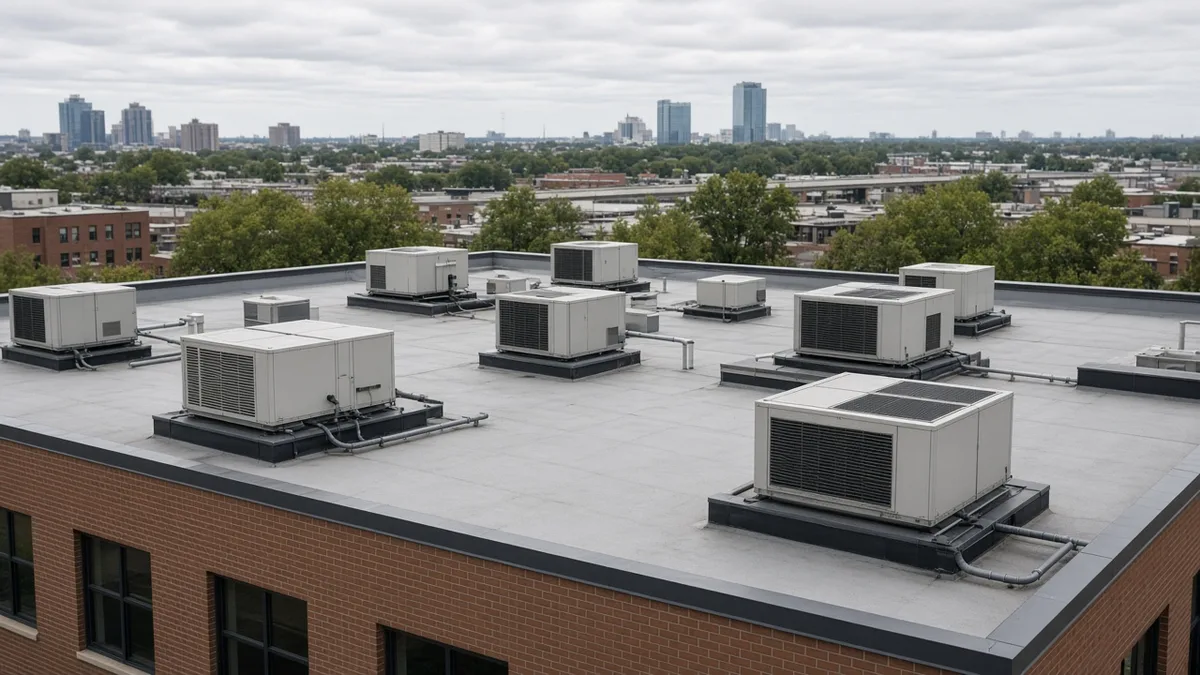
Commercial loan replacement reserves are monthly deposits, sometimes plus a lump sum at closing, set aside for capital items the building will have to replace later. A one-time repair is a different check. It cures something that is already broken, or something a report says must be fixed before or shortly after the loan funds. Mixing the two makes the cash flow look healthier than the building is, or it makes a buyer fund the same roof twice.
Illustrations are not a rate quote and not an offer of credit. An inquiry is not an approval.
How commercial loan replacement reserves differ from repairs
A replacement reserve pays for items that wear out on a schedule: roofs, major HVAC, parking surfaces, elevators, boilers. The deposit is how a long loan avoids a surprise capital bill in year eight with an empty account. A repair is immediate. A failed roof section, a trip hazard, or a life-safety item flagged by an inspector is not “future replacement.” It is a condition of closing or a short escrow after closing.
HUD’s multifamily handbook chapter on the reserve for replacements is a public example of that split, written for insured multifamily projects rather than for every private commercial loan. The chapter describes a reserve that provides cash for capital items, funded by a lump-sum deposit at closing and by monthly deposits collected with the mortgage payment. It says the reserve is not the budget for routine maintenance, which is paid from operating income. Withdrawals are documented, generally against invoices, and items that were supposed to be finished before closing are not meant to be paid quietly from the reserve in the early life of the loan. Private commercial files often copy the idea without copying the forms. Use the chapter as a clear statement of the categories. Use your commitment for the dollar amount.
The handbook also explains why a single factor tied to original project cost is a weak way to set the deposit. A generic percentage does not know which equipment is in this building, how it has been maintained, or what it will cost when it is actually replaced. A component list beats a slogan.
Build the list from remaining life.
- Roof replacement cost $180,000, about 15 years of life left: $180,000 ÷ 15 = $12,000 a year.
- HVAC $48,000, about 8 years left: $48,000 ÷ 8 = $6,000 a year.
- Parking lot $36,000, about 12 years left: $36,000 ÷ 12 = $3,000 a year.
Annual deposit in this illustration: $21,000, or $1,750 a month. A property condition report or an engineer’s table may use different lives and different costs. The method is the point. Immediate failures are pulled out of this list and placed in the repair column. A roof that must be replaced before closing is a repair escrow or a price cut. It is not a reason to “start the monthly deposit and hope.”
The appraisal and the condition report are where these facts usually enter the file. If they disagree, the more expensive honest version is the one to underwrite. A seller’s spreadsheet that shows a new roof, contradicted by an inspector, is how reserves get argued at the worst time.
Where the deposit hits the ratio
Some files deduct replacement reserves when they build net operating income. Some calculate NOI without them and then test cash flow after the deposit. The cash leaves either way. NOI for a commercial loan is the page to read before you compare two term sheets that deduct the reserve on different lines.
Illustration. Effective gross income $500,000. Operating expenses before reserves $190,000. NOI before the reserve $310,000. Annual reserve $24,000. NOI after the reserve $286,000. Debt service $220,000.
Coverage before the deduction: $310,000 ÷ $220,000 = 1.41. Coverage after the deduction: $286,000 ÷ $220,000 = 1.30.
Same building, same payment, two ratios. A buyer who was shown 1.41 and a commitment that underwrites 1.30 has not been cheated by arithmetic. They were using a different line. Ask which line the coverage test uses, and run your own cash after the deposit regardless. The trailing twelve should show what was actually spent on capital items, so a year with almost no capital spending is not mistaken for a building that will never need a roof.
A covenant can lock the deposit in. Commercial loan covenants sometimes include the reserve account, a minimum balance, and a consent right before you draw. Skipping a month because collections were light can be a default even when you still made the mortgage payment. The deposit is part of the bargain, not a savings goal you may pause.
The lump sum at closing is cash to close. It is separate from the repair escrow. You might fund an initial reserve balance so the account is not empty on day one, escrow $40,000 to replace a failed unit of equipment within ninety days, and then pay the monthly deposit going forward. Three checks. Label them. Sellers sometimes offer a credit that is smaller than all three combined and describe it as “covering the reserves.” Add the numbers.
What the reserve is a poor tool for
Routine unit turns, paint between tenants, landscaping, and minor plumbing are operating expenses. Paying them from the replacement reserve drains the capital account and flatters operating expenses. HUD’s chapter draws that line for its projects. Private holders draw it too, because a reserve that has been spent on paint is not there for the roof.
Borrower liquidity on a rental DSCR file is a different bucket. DSCR reserve requirements usually mean months of payment in an account you control, on a one-to-four-unit investment loan. A commercial replacement reserve is a property account for future capital items, often controlled with the holder of the note. Similar word, different cash, different product. Do not satisfy one by pointing at the other.
A brand-new roof can justify a smaller deposit for that component. It rarely justifies a zero reserve for the rest of the building. HVAC, flatwork, and elevators keep their own clocks. A file may allow a lower deposit when a recent condition report shows long remaining lives, and it may raise the deposit later if spending runs hot. The right to revisit the amount is common. Treat the initial number as a starting budget with an audit trail, not as a permanent discount.
If you sell, read the note. Some reserves travel with the property to the buyer. Some may be released when the loan is paid off. Assume nothing from a different loan you closed years ago. The account is part of the collateral arrangement until the documents say it is yours.
A clean way to present it
Put two columns in front of anyone sizing the loan.
| Item | One-time repair | Replacement reserve |
|---|---|---|
| Timing | Before closing, or a short escrow after | Monthly, for the life of the requirement |
| Examples | Failed equipment, safety items, deferred maintenance the report will not waive | Roof, HVAC, parking, elevators as they age |
| Cash | Escrow or price reduction now | Deposit now, if required, plus every month |
| Effect on NOI | Usually a condition, not a recurring expense line | Often deducted, or tested below NOI |
| Who releases it | The escrow instructions | The reserve agreement, often against invoices |
Then attach the component math for the monthly column and the bids or inspector notes for the one-time column. Commercial loan replacement reserves stop being an argument when both columns are visible. They become a fight when one column is missing and the seller’s net sheet pretends the building will never need a capital dollar.
Have a commercial or mixed-use investment property in mind? Start with a confidential inquiry or call (907) 841-1600.
Frequently Asked Questions
Can replacement reserves pay for paint and ordinary unit turns?
Those costs are routine operations, and the reserve is meant for capital replacements such as roofs and major mechanical equipment. Paying turns out of the reserve empties the account that was supposed to fund the next large item. Budget paint in operating expenses. Leave the reserve for the component list.
If the roof is new, can the monthly deposit be zero?
A new roof can lower the deposit that belongs to the roof, because the remaining life is long and the annual cost of replacing it later is spread over more years. Other components still age. Most files want a deposit that reflects the whole list, and many keep the right to increase it if actual spending runs ahead of the plan.
Do replacement reserves reduce the coverage ratio?
They reduce cash. Whether they reduce the official ratio depends on whether the file deducts them inside net operating income or tests them after it. Two term sheets on the same building can show different coverage for that reason alone. Ask which line is used, and underwrite your own cash after the deposit in either case.
Who controls withdrawals from the account?
Typically the note holder or the servicer, under the reserve agreement, against invoices for eligible items. Some agreements release funds only after the work is done. A request for paint, or for an item that was supposed to be repaired before closing, is a common denial. Read the eligible-item list before you count the balance as spending money.
What happens to the reserve balance if the property is sold?
It follows the documents. On many loans the balance stays with the property for the new owner while the loan remains. When the loan is paid off, the agreement may release the balance to the borrower, and it may not do so automatically on the day of the sale. Have the payoff letter say what happens to the account.
Have a property in mind?
Submit a confidential inquiry — business-purpose and investment property only.
Start InquiryDisclaimer: This article is for informational purposes only and does not constitute financial, lending, legal, or tax advice. Commercial & DSCR Loans is a marketing and referral information service — not a lender, broker, or financial institution. Content relates to business-purpose and investment property financing only. Disclaimer · Terms · Privacy