Flex Industrial Commercial Loan Basics
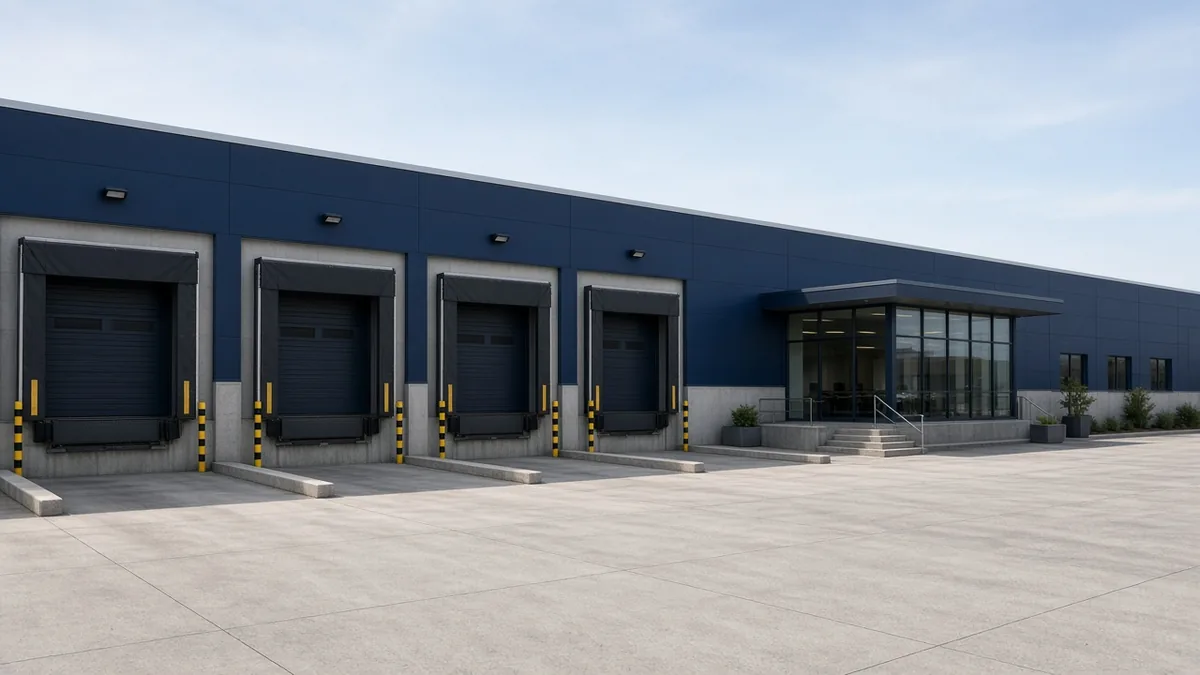
A flex industrial commercial loan finances an existing building that is part warehouse and part finished office or showroom, leased to tenants who need both. Investors call it flex because the same shell can hold a contractor, a light distributor, a service shop, or a small manufacturer without becoming a bulk distribution center or a downtown office. The loan is still a commercial income loan. Proceeds come from value and from net operating income on the leases in place, not from a story about who might rent a vacant bay after you renovate it.
This is educational, not a rate quote and not an approval. It is not a construction or spec-development product. An inquiry is not an application.
What a Flex Industrial Commercial Loan Underwrites
Flex, in ordinary brokerage language, means a single-story or low-rise industrial building with a higher share of finished space than a bulk warehouse, grade-level or dock doors, and bay sizes a small tenant can actually use. A 40,000-square-foot building with about 8,000 square feet of office is 20 percent office finish. That ratio is an illustration of the mix, not a legal definition and not a requirement. Some buildings run higher office shares and still trade as flex. Some are mostly warehouse with a small front office and belong in a plain industrial conversation. The label on the flyer matters less than the lease and the floor plan.
NAIOP, the Commercial Real Estate Development Association, is the industry body that publishes research on industrial product types, including how flex and warehouse space are discussed in the market. Their public materials live at naiop.org. Use them for vocabulary. Use the rent roll for the loan.
What a lender is actually buying is stabilized income:
- Leases that say the rent, the term, who pays taxes and insurance, and what happens at expiration.
- A tenant mix that is not one hobby business on a month-to-month handshake.
- A building that can be insured and appraised as industrial property with the office build-out it really has.
- NOI that covers annual debt service by a margin the capital source accepts. If underwritten NOI is $160,000 and debt service is $128,000, coverage is 1.25 in the illustration. Your file will use its own floor.
A vacant flex building is a lease-up, not a stabilized loan. Some programs will look at market rent with a haircut and a reserve. Many will not treat a dark bay as if it were occupied at the asking rent. If you need to build the structure, subdivide raw land, or fund a spec shell, this is the wrong page. Existing, leasable flex is the collateral.
For a building that is truly a warehouse with minor office, the closer reading is warehouse investment property financing. For a smaller industrial bay that does not fit the flex marketing word, see financing a small industrial property. The commercial property loan requirements checklist covers the documents both of those share with flex.
What Makes Flex a Different Risk From Bulk Warehouse
Bulk distribution is often one tenant, a long lease, and a building designed around truck courts. Flex is often several smaller tenants, shorter terms, and more tenant improvement already in the walls. That changes the credit.
Rollover is lumpy in a small way. Three tenants in 40,000 square feet means one move-out is a large percent of NOI. A single-tenant warehouse has binary risk instead. Neither is automatically safer. You can see flex rollover coming lease by lease. You still need cash for downtime, a commission, and some paint. Underwrite a vacant bay, not a perpetual 100 percent.
The office finish can be a sunk cost. A previous tenant’s private offices do not rent themselves to the next forklift user. Specialized build-out can lower the next rent or cost you a demolition allowance. Read the space as the next tenant will, not as the last tenant’s brochure.
Use can drift. A quiet contractor is a different insurance and environmental profile from a user who starts storing materials the zoning or the policy does not want. The lease’s use clause is a loan document even though the lender did not write it. Environmental screening still matters on industrial land. A Phase I that mentions a prior shop use is a timeline item, not an insult.
Parking and doors set the rent. A flex bay without a workable door or with too little parking for the office headcount will appraise as what it is. Do not project office rents onto a warehouse that has nowhere for the employees to sit, or warehouse rents onto a pretty lobby with no loading.
Small-balance commercial execution is common here because a local flex building is often below institutional conduit size. The loan is not “small” in the sense of casual. Appraisal, insurance, and entity documents still decide the closing calendar.
How to Prepare the File
Bring the building as it operates this month.
- A rent roll with square feet, rent, lease end, and expense structure for every bay, including vacant bays at zero, not at asking rent.
- Trailing expenses: taxes, insurance, common utilities, repairs. If tenants reimburse expenses, show the reimbursements separately so NOI is not double-counted.
- A simple plan of the office versus warehouse split. The 20 percent illustration above is the kind of sentence an appraiser can check.
- Entity and signer documents, plus whoever guarantees, if the structure uses a guarantee. Several bays do not mean several informal owners. Title has to match.
- Insurance that describes the real use. A policy written for vacant storage on a building full of occupied offices will not survive the closing checklist.
Then ask for proceeds off value and coverage, and ask what vacancy or rollover reserve the underwriter will impute. If your cash flow only works with every bay occupied through the loan term, you do not have flex income. You have a perfect year. Perfect years are a bad underwriting assumption on multi-tenant industrial.
Cash-out on a building you already own follows the same NOI. Pulling equity until coverage is thin leaves you no cash for the next vacancy, which is the main operating event in flex. Rate-and-term refinances that lower a painful payment are a different conversation from a cash-out that funds a separate project. Say which one you want.
What Not to Staple to This Loan
Do not staple a plan to add a second building, a yard you have not entitled, or a conversion into a use the zoning does not allow. Do not describe a church, a cooperative, or a residential house as flex industrial because it has a garage. Do not ask this product to carry raw land beside the building unless that land is a minor, eligible part of an income property a reviewer can accept. When in doubt, leave the extra parcel out of the pitch and finance the leased building.
If the “flex” asset is actually a single-family rental with a workshop, it is a residential investment file, possibly DSCR, and this commercial loan is the wrong tool. Unit type and certificate of occupancy will surface the mismatch anyway.
Have a commercial or mixed-use investment property in mind? Start with a confidential inquiry or call (907) 841-1600.
Frequently Asked Questions
How is flex industrial different from a warehouse loan?
Flex usually has more finished office or showroom space and smaller tenant bays than a bulk warehouse. The loan is still commercial credit on income and value, and the appraisal will follow the real square-foot split rather than the listing headline. Describe a nearly pure warehouse as a warehouse.
Can I finance a vacant flex building?
Sometimes market rent is considered with a haircut, reserves, or a lower loan amount, and often a dark building fails a program that wants in-place income. Do not underwrite asking rents as if the bays were leased. Construction financing to create the building is outside this product.
Do several short leases hurt the file?
They change it. Short terms mean sooner rollover, which a careful income figure will reflect with downtime or a reserve, and they also mean you are not locked to one weak tenant for a decade. Provide every expiration date instead of an average that hides month-to-month tenants.
Is environmental review part of a flex loan?
Plan on screening appropriate to an industrial site. Prior shops, tanks, or unknown fill are ordinary questions, and a report that needs follow-up will move the calendar and can make a property ineligible. Disclose the site history at the start.
Does a leased flex building guarantee proceeds or a rate?
No. Coverage, appraisal, tenant quality, and the capital source still control the outcome. The coverage illustration in this article is arithmetic, not a quote. Send the address, the office-versus-warehouse split, and a current rent roll.
Have a property in mind?
Submit a confidential inquiry — business-purpose and investment property only.
Start InquiryDisclaimer: This article is for informational purposes only and does not constitute financial, lending, legal, or tax advice. Commercial & DSCR Loans is a marketing and referral information service — not a lender, broker, or financial institution. Content relates to business-purpose and investment property financing only. Disclaimer · Terms · Privacy