HUD 223(a)(7) Refinance, Explained
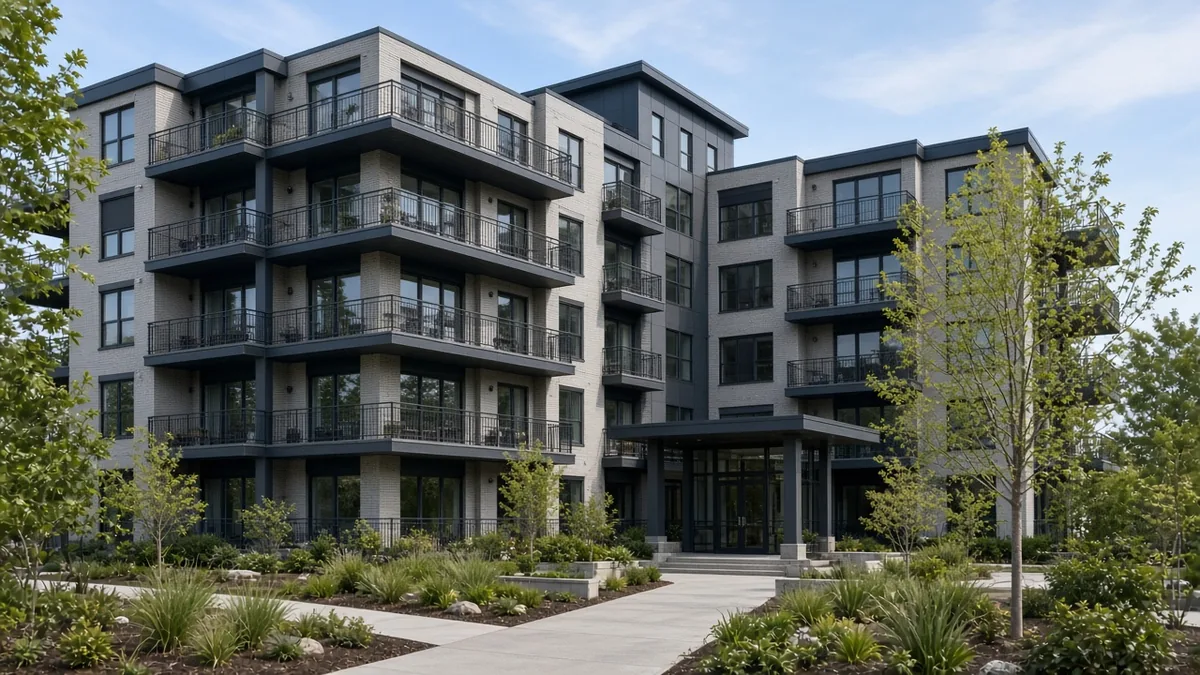
A HUD 223(a)(7) refinance is a streamlined refinance of a multifamily loan that is already insured by FHA. HUD’s Multifamily Accelerated Processing Guide describes the program as a refinance of currently insured FHA loans. The existing insured mortgage is paid off. A new mortgage is endorsed. The property was already in the insured portfolio, which is why the file can move with fewer of the steps used on a first-time insurance application.
A conventional multifamily loan, or the purchase of a property that is not already FHA-insured, is a different application. That path is the one described on the page for HUD 223(f) loan requirements. This page does not restate it. If the mortgage on the building is not currently FHA-insured, 223(a)(7) is the wrong section.
Figures below explain HUD’s tests. They are not a rate quote and not an offer of credit. An inquiry is not an approval.
What a HUD 223(a)(7) refinance can include
HUD’s program summary limits eligibility to loans that are currently FHA-insured. Risk-share loans are not eligible. HUD-held loans are not eligible unless they were restructured under the Mark-to-Market program in the Multifamily Assisted Housing Reform and Affordability Act. Properties that need substantial repairs, or that propose new construction such as additional units or other permanent structures, are not eligible. The section is a refinance of an existing insured loan on an existing residential property, not a plan to enlarge the building.
Proceeds pay off the insured loan and cover transaction costs the program allows. HUD’s processing guidance also allows certain critical and non-critical repairs and deposits to the reserve for replacement, within the cost limits and the repair rules for this section. Equity take-out, the cash-out refinance investors use on other products, is outside the point of this section. The loan-amount tests below are how that limit shows up in the number.
The new mortgage stays inside the insurance program that already covers the property. A 223(a)(7) refinance of a loan insured under section 223(f), or under section 221(d)(4), continues under that original section. You are not switching programs in order to pull cash out. You are replacing the insured note with a new insured note on the same authority.
Most files are built to lower the interest rate and to re-amortize the balance. The new term can stay inside the remaining term, or it can extend. HUD’s summary allows an extension of up to 12 years, and that 12 years includes extensions already granted on earlier 223(a)(7) refinances. In every case the term cannot exceed 75 percent of the remaining economic life of the property. A capital-needs assessment has to support the longer term. A longer amortization lowers the payment only when the physical life supports it.
The three caps on the loan amount
HUD’s summary says the loan is limited to the lesser of three amounts.
- The original principal balance of the insured mortgage.
- The existing indebtedness plus transaction costs.
- The amount that can be supported by 90 percent of net operating income. For a project with more than 90 percent project-based rental assistance, and an assistance term of more than 15 years after endorsement, the support test uses 95 percent of net operating income.
The third test is a coverage cushion. If the new payment has to fit inside 90 percent of net operating income, then income divided by the payment is about 1.11. That division is a way to read the 90 percent test. It is not a separate rule, and it is not a promise that a particular property will qualify at that figure.
Walk an illustration. Original principal was $10,000,000. The unpaid balance is $7,200,000. Eligible transaction costs are $300,000. Net operating income is $900,000, and the file uses the 90 percent test, so $810,000 a year is the income available to support the payment.
- Cap one, original principal: $10,000,000.
- Cap two, balance plus costs: $7,500,000.
- Cap three depends on the rate and the term, because those set the payment that $810,000 can carry.
The lesser of cap one and cap two is $7,500,000, and cap three can cut that further. Nothing in the tests pays the owner the difference between today’s value and the old balance. That difference stays in the property. A prepayment penalty on the existing insured loan can be part of the cost conversation. The shapes of those penalties are covered on commercial loan prepayment penalty types. HUD’s guide also says prepayment approval has to be requested by the servicing mortgagee when the application goes in.
What the streamline actually skips, and what it does not
“Streamline” in HUD’s summary means some requirements of other multifamily programs are not required, because the loan is already insured. It does not mean the application is a signature and a rate lock. A capital-needs assessment is required. The lender’s application is signed by an approved officer. Repairs that are large enough to trip a higher environmental review, or Davis-Bacon wage rules, take the project out of eligibility. A light renewal of finishes can fit. A plan to add a floor does not.
The servicing lender and the lender doing the refinance are sometimes different firms. HUD’s guide accepts a borrower letter to the current servicer, asking that servicer to request prepayment approval, when it accompanies the firm-commitment application. Build that letter into the calendar. A refinance that surprises the servicer is how a prepayment request sits unfinished.
Rate and term are the reasons owners open this file. The payment falls when the new rate, the new term, or both reduce debt service, and when the 90 percent (or 95 percent) test still supports the balance. If the unpaid balance plus costs already exceeds what net operating income will carry, the streamline does not invent proceeds. The owner brings the gap or the file waits.
This is not a one-to-four-unit DSCR refinance. DSCR rental loans qualify smaller investment properties from rent and the payment, without FHA mortgage insurance. A 223(a)(7) file exists only because an FHA-insured multifamily mortgage is already on the property. Bringing a conventional fourplex, or a conventional forty-unit building, to this section will not make it a streamline.
How to tell whether the section fits
Pull the note, the FHA project number, and the latest mortgage statement. Confirm the loan is still insured and is not a risk-share loan. Confirm you are not trying to add units or to rebuild the property. Then run the three caps with your own unpaid balance, a real cost estimate, and trailing net operating income. If cap two and cap three are close, a small change in rate or in the repair list moves the proceeds.
Ask the lender who will process the file whether an earlier 223(a)(7) refinance already used part of the 12-year extension. HUD’s summary tells lenders to check the loan history for that reason. The second refinance does not receive a fresh 12 years on top of an extension the property already took, beyond the original limit.
The full processing rules are in HUD’s Multifamily Accelerated Processing Guide, including the 223(a)(7) summary. Use that guide for the eligibility lines. Use this page to decide whether your loan is even the kind of loan the section describes.
Have a commercial or multifamily investment property in mind? Start with a confidential inquiry or call (907) 841-1600.
Frequently Asked Questions
Can a HUD 223(a)(7) refinance pay off a conventional multifamily loan?
No. HUD’s guide limits the section to loans that are currently FHA-insured, with a narrow exception for certain HUD-held loans already restructured under Mark-to-Market rules. A conventional loan is a different application. Acquisition or refinance of a property that is not already insured is the subject of the 223(f) page, not this one.
Can the owner take cash out?
The loan is capped at the lesser of the original principal, the existing debt plus transaction costs, and the amount net operating income can support. Those caps pay off the insured loan and allowed costs. They do not distribute the difference between value and debt. Equity take-out is outside what this section is built to do.
Can the refinance add units or rebuild the property?
Properties that propose new construction, including additional units or other permanent structures, are not eligible. Substantial repairs are not eligible. Repairs that trigger a higher environmental review or Davis-Bacon wages are not eligible. The section refinances an existing insured residential property. It does not expand it.
How long can the new term run?
HUD’s summary allows re-amortization within the remaining term, or an extension of up to 12 years, and that 12 years includes extensions already granted. The term still cannot exceed 75 percent of the remaining economic life. A capital-needs assessment has to support the longer life. A prior 223(a)(7) refinance may already have used part of the extension.
Is this the same product as a DSCR loan on a small rental?
A DSCR rental loan is a business-purpose loan on an investment property, qualified from rent and the payment, without this FHA insurance. A 223(a)(7) refinance exists only for a multifamily mortgage that FHA already insures. The coverage math looks related. The programs are not interchangeable, and a small rental note cannot be streamlined under this section.
Have a property in mind?
Submit a confidential inquiry — business-purpose and investment property only.
Start InquiryDisclaimer: This article is for informational purposes only and does not constitute financial, lending, legal, or tax advice. Commercial & DSCR Loans is a marketing and referral information service — not a lender, broker, or financial institution. Content relates to business-purpose and investment property financing only. Disclaimer · Terms · Privacy