Strip Center Commercial Loan Guide
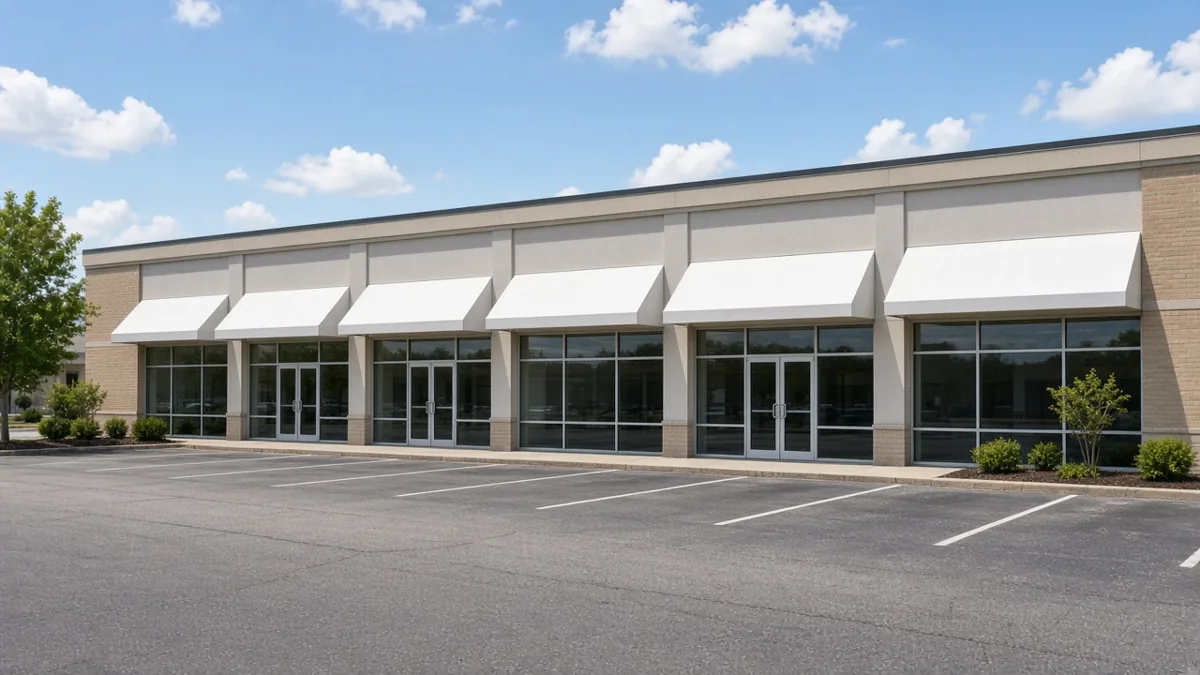
A strip center commercial loan finances an existing line of retail bays, usually one story, with parking in front and more than one door a shopper can use. The income is rent. The risk is what happens when a lease ends. A center with several local tenants rolls over in pieces. A center leased entirely to one tenant on a net lease rolls over all at once. In-place rent, vacancy, and the calendar of expirations are how a file tells those stories apart.
The loan in this guide is on a center that is already standing and already earning, or close to it. Pricing a brand-new building, funding vertical work, or lending on a vacant pad is a different request. Here the question is whether the rent that is actually under lease, and the rent that can be re-leased, covers the debt.
The coverage test is:
DSCR = net operating income ÷ annual debt service
Net operating income starts with collected rent and expense recoveries, then subtracts vacancy and credit loss you are honest about, operating expenses the landlord still pays, and often a reserve for capital items. Debt service is the annual loan payment. A result of 1.00 means the income in that formula equals the payment. A higher result is cushion. Programs set their own lines, and this page does not declare a legal minimum.
Illustrations are arithmetic, not a rate quote and not an offer of credit. An inquiry is not an approval.
How a strip center commercial loan reads multi-tenant rollover
Picture five bays. Four are leased to local shops and one is a small regional tenant. Leases end in different years. If one shop leaves, you may lose a slice of rent, pay a commission, fund a modest tenant buildout, and sit dark for a few months. The other four tenants keep paying. That is rollover you can survive if the lost slice was not half the income and if you had cash for the downtime.
In-place rent is the rent in the leases now. Market rent is what a new tenant would pay for that bay today. When in-place rent is above market, the rollover year is a step down. A file that underwrites today’s rent forever will overstate income in the year that lease ends. A file that marks the bay to market at expiry, and inserts a few months of vacancy, is closer to the cash you will feel. Programs differ on how hard they stress that year. Ask whether the quote uses in-place rent for the full term or a rollover case.
Vacancy has two faces. Physical vacancy is the dark bay. Economic vacancy is the free rent, the discount, and the tenant who is in occupancy and behind. A center that is “100 percent leased” with three leases ending inside a year is fully occupied and still exposed. A center at 90 percent leased with the empty bay priced at a realistic rent, and with the other leases staggered, can be the steadier collateral. Weighted average lease term is the shorthand for how much term you have left, weighted by rent. A short average means the rollover conversation happens soon. A long average pushes it out, and it can hide one giant lease inside a pleasant average if you do not read the rent roll bay by bay.
Expense recoveries decide how much of the tax, insurance, and maintenance bill stays with you. On a modified gross lease the landlord may keep the roof and the structure. On a triple-net bay the tenant pays taxes, insurance, and common-area costs, and the landlord may still own the roof and the parking lot when they fail. Recoveries that look complete on a spreadsheet and arrive late, or that exclude the capital item, leave a hole in net operating income. Underwrite the hole.
One net-lease tenant is a different risk
A single tenant on a net lease can look calm. One check covers the bays. The tenant pays taxes, insurance, and maintenance. The rent may step up on a schedule. There is no small-shop turnover every year. The cliff is the end of that lease, a termination right, a sales kick-out, or a co-tenancy clause that lets the tenant pay less or leave if another named occupant goes dark. When that happens, income can fall from nearly all of the center’s rent to none.
Single-tenant and multi-tenant commercial loans compare those patterns across property types. Five tenants at roughly even rents can lose one and still cover a conservative payment. One tenant at the whole rent can cover until that lease is in question.
A worked coverage example
Use five bays and round numbers. In-place base rent totals $420,000 a year. Expense recoveries that you actually collect are $70,000. Potential gross income is $490,000. You underwrite vacancy and credit loss of $30,000 because one bay’s lease ends soon and one tenant pays slowly. Effective income is $460,000. Landlord-paid expenses, including a management fee, unreimbursed repairs, and a structural reserve, are $150,000. Net operating income is $310,000. Annual debt service on the requested loan is $250,000.
DSCR = $310,000 ÷ $250,000 = 1.24
That 1.24 is cushion inside this formula. It is an illustration. Change the vacancy. If the soon-to-expire bay is 20 percent of rent and you assume it goes dark for half a year with no recovery of its expenses, the income drop can erase most of the cushion. Write that case beside the base case. A quote that only shows the base case has not described rollover.
Now collapse the same center into one net lease at $420,000, with the tenant paying expenses so the landlord’s remaining costs are $40,000 of management and reserves. Net operating income is $380,000 before you stress anything. Debt service $250,000. DSCR = $380,000 ÷ $250,000 = 1.52. The ratio looks stronger because the tenant carries the expenses and you assumed no vacancy. The stress case is harsher: if that tenant leaves and the center is dark for a year, income available for debt service can be near zero while you still owe the payment. The pretty ratio and the cliff belong in the same memo. Multi-tenant rollover is a series of smaller hits. Single-tenant rollover is one large hit. Price and leverage should respect which one you own.
A trailing twelve-month statement is the check on the illustration. If collections were $400,000 and the rent roll says $420,000, the gap is concessions, vacancy, or a tenant who is behind. Underwrite collections you can explain. A rent roll that has never been matched to deposits is a story.
Clauses that move rent without a new tenant
Co-tenancy clauses can cut rent or let a tenant leave when an anchor or a named neighbor goes dark. On a strip center the “anchor” may be a grocery shadow next door that you do not even own. Read whether your tenant’s rent depends on a business outside your collateral. Exclusive-use clauses can block the replacement tenant you wanted for a dark bay. A go-dark clause can let a tenant keep paying or stop operating while still holding the lease. Each clause is a reason the in-place rent might not survive a neighbor’s departure.
Partnerships and S corporations that own rental real estate report gross rents and expenses on IRS Form 8825. The instructions describe that form as the place those entities report rental real estate income and deductible expenses, with gross rents on their own line. When the owner files it, the rent roll and those gross rents should be reconcilable. Vacancy, credit loss, and reserves in a loan model can make net operating income lower than the gross-rent line. Depreciation on the return is not cash and does not pay debt service. A tax advisor owns the form. The loan file owns the rent roll and the deposits.
What to put in the loan folder
Then compute net operating income on the in-place rent and on the rollover case. Divide each by the annual payment. If the rollover case falls through the program’s line, reduce the loan or bring more equity until both cases are livable for you, even if a program would have accepted the prettier one. A strip center commercial loan is a bet on re-leasing as much as on the checks arriving this month. The multi-tenant version rolls in slices. The single net-lease version depends on one tenant’s term.
Have a commercial or mixed-use investment property in mind? Start with a confidential inquiry or call (907) 841-1600.
Frequently Asked Questions
How is a multi-tenant strip center different from one net-lease tenant?
Several tenants mean one departure usually removes a slice of rent, plus downtime and re-leasing cost, while the others keep paying. One net-lease tenant means smoother operations and a single cliff if that tenant leaves, kicks out, or gains a right to pay less. The coverage ratio on today’s rent can look better on the single tenant and still be the riskier rollover. Read the expiration schedule either way.
Does in-place rent get used for the whole loan term?
Often it is the starting point, and many files stress the year a lease ends if in-place rent is above market or if downtime is likely. Programs differ on how much of a mark-to-market or vacancy they apply. A quote that freezes today’s rent with no rollover case has skipped the main risk on a strip center. Ask for the case they used.
What vacancy should I underwrite if the center is full?
Physical vacancy can be zero while near-term expirations are large. A full center with staggered long leases is a different risk from a full center with half the rent ending soon. Economic vacancy still includes concessions and slow pay. Use a rollover case beside the in-place case so “fully leased” does not hide the calendar.
Do expense recoveries make net operating income equal to base rent?
They do when tenants truly pay the expenses and they pay them on time. Landlords often still carry management, reserves, and capital items such as the roof and the parking lot. Missed recoveries and excluded capital costs are landlord cash. Subtract what you will actually pay before you divide by debt service.
Can percentage rent be counted in the coverage ratio?
Many programs lean on base rent and treat percentage rent as extra they will not fully underwrite. If the ratio only works after adding sales rent, the file is dependent on sales you do not control. Show percentage rent as a separate line. Qualify the loan on the base rent the program accepts, and keep the sales rent as upside in your own budget.
Have a property in mind?
Submit a confidential inquiry — business-purpose and investment property only.
Start InquiryDisclaimer: This article is for informational purposes only and does not constitute financial, lending, legal, or tax advice. Commercial & DSCR Loans is a marketing and referral information service — not a lender, broker, or financial institution. Content relates to business-purpose and investment property financing only. Disclaimer · Terms · Privacy