Should I Keep an Inherited Rental Property?
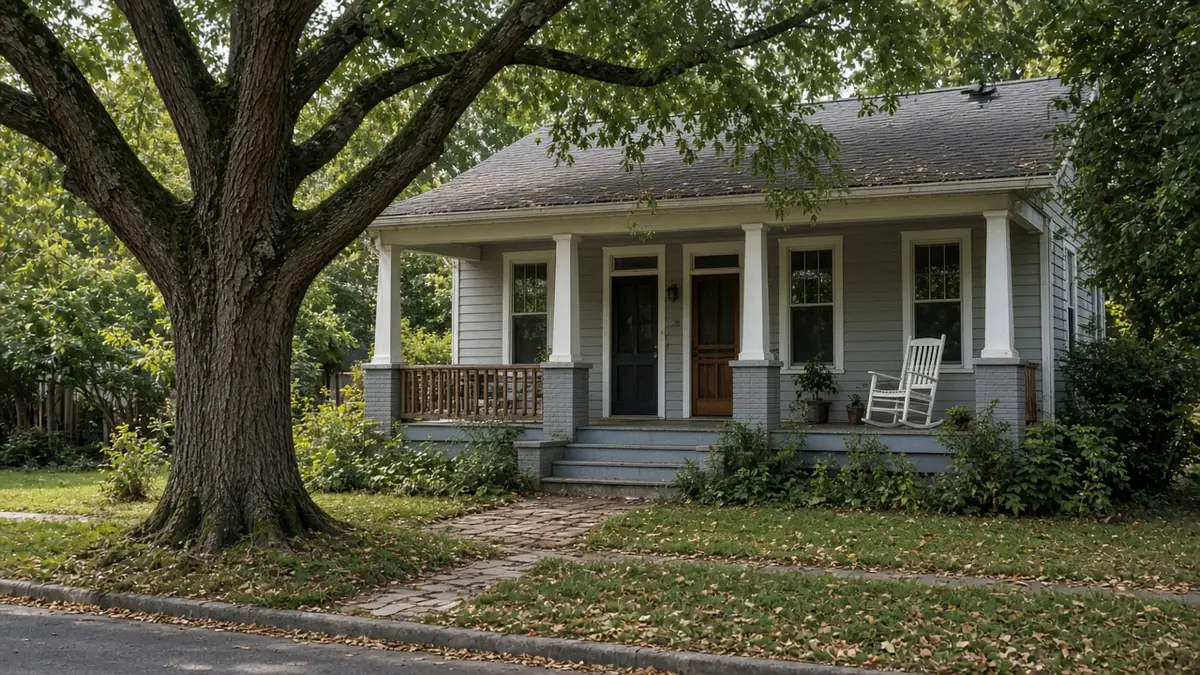
Should I keep an inherited rental property? Answer it from the basis you received, the cash the building produces now, and what a sale would actually tax. Publication 551 says the basis of property inherited from a decedent is generally its fair market value on the date of death. That number replaces the price the decedent paid. Keeping the property means depreciating the new basis and living with the rent and the payment. Selling near that value often means little taxable gain. A 1031 defers gain you actually have, which may be modest if you sell before the property moves much past the date-of-death value. Financing the inheritance is a different decision and is not this one.
Illustrations here are not a rate quote and not an offer of credit. An inquiry is not an approval.
Should I Keep an Inherited Rental Property You Can Underwrite
Start with cash, because basis does not pay the mortgage. Cash left after debt service is collected rent minus operating costs minus the full payment. A step-up does not lower the principal and interest. If the decedent was feeding the property every month, you will feed it too, unless the rent or the loan changes. Keep the building when that cash number is one you can fund and you want the real estate. Sell or exchange when you want out of the operating job or the cash does not work. The tax result comes second, and it is often kinder than heirs expect, because the old purchase price is no longer the basis.
Publication 551 states the inherited basis as one of four amounts. The usual one is fair market value on the date of death. The second is fair market value on the alternate valuation date if the estate’s representative elects alternate valuation. The publication tells you to read the instructions for Form 706 for that date. The third is a special-use value for certain farm or closely held business real estate if that method is chosen for estate tax. The fourth is the decedent’s adjusted basis in land to the extent of a qualified conservation easement excluded from the estate. For a typical leased house or small building, you are on fair market value at death unless the estate elected something else. Ask the representative before you invent a number.
If the estate files a federal estate tax return, beneficiaries generally receive a Schedule A (Form 8971) reporting the estate-tax value. Publication 551 says certain beneficiaries must use that value as their initial basis. Section 1014(f) and the regulations it cites require basis to be consistent with the estate-tax value finally determined. If the property increased the estate tax, you do not get to report a higher starting basis than the value on that schedule. If you did not receive a Schedule A, the publication says your basis can be determined using the appraised value at the date of death for state inheritance or transmission tax purposes. Get an appraisal aimed at the date of death. A listing price six months later is a different number.
One exception refuses the step-up. Publication 551 says the fair-market-value rule does not apply to appreciated property you receive from a decedent if you or your spouse gave that property to the decedent within one year before death. Your basis is the decedent’s adjusted basis immediately before death. Appreciated property means the fair market value on the day you gave it was higher than its adjusted basis. A deathbed gift that comes back to you does not receive a new basis.
How you and the decedent held title changes whose half moves. In community-property states, Publication 551 says that when either spouse dies, the total value of the community property, including the surviving spouse’s half, generally becomes the basis of the entire property, if at least half the value of the community interest is includible in the decedent’s gross estate. That is a both-halves result. It is not the rule for every joint tenant in every state. For a qualified joint interest — spouses as tenants by the entirety, or as the only joint tenants with right of survivorship — the publication says the survivor’s basis is the cost of the survivor’s half, decreased by depreciation the survivor was allowed, and increased by the survivor’s basis in the half inherited. A non-spouse joint tenant does not automatically receive a full step-up of the whole property. Publication 551’s example gives the survivor a step-up only on the interest included in the decedent’s estate. Read the deed before you depreciate the entire building from one appraisal.
Depreciation Starts on Your Basis, Not Theirs
You depreciate the basis Publication 551 gives you, and you leave the land out. Publication 527 says you begin when the property is placed in service, meaning ready and available for rent. If you keep the tenant and the unit is already available, your holding period for depreciation starts when you acquire it, not when the decedent bought it. You do not finish the decedent’s old schedule. Their remaining years and their old cost are not your basis.
Under the general depreciation system, Publication 527 lists residential rental buildings and structural components at 27.5 years, straight line, mid-month convention. A small apartment building that is residential rental property uses that life on the building portion of the new basis. Nonresidential property uses the nonresidential recovery period in the same publication. Match the building. Then keep the worksheets. Every year of depreciation you are allowed reduces the basis you will use on a later sale, including depreciation you were allowed and did not claim.
That new depreciation is the gain a quick sale avoids and a long hold creates. Sell before you have taken much depreciation, close to date-of-death value, and taxable gain is mostly post-death price movement plus selling costs in the usual direction. Hold for years, claim 27.5-year depreciation, and a later sale has to deal with basis that stepped up and then stepped down by the deductions. Depreciation recapture on a rental is how that slice is taxed. It is a reason to know your basis. It is not, by itself, a reason to sell this month.
Sell, Keep, or Exchange
Keep when the cash flow is acceptable, you can manage or pay someone to manage, and you want this asset rather than the equity in cash. The step-up’s gift to a keeper is a new depreciation schedule on a higher basis than the decedent had left, if the property had appreciated. Run the depreciation on the building portion of date-of-death value and compare it with the cash flow. Depreciation is not spendable. It changes the taxable result of a property you were going to keep anyway.
Sell when you do not want the building. Because basis is generally fair market value at death, a sale reasonably soon, at a price near that value, often produces little gain before selling costs. You are not taxed as if you inherited the decedent’s original receipt. You are taxed on what happened after death, plus the depreciation and other adjustments after you took title. If several heirs disagree, a sale converts the argument into cash. Model selling costs. A price equal to the appraisal is not cash in your pocket equal to the appraisal.
Use a 1031 when you want another investment property and you have gain worth deferring. After a step-up, the gain may be small, so the deferral is worth less than it would have been in the decedent’s hands. It still matters if the property appreciated after death or if depreciation since the inheritance would be recognized on a taxable sale. A 1031 into a rental you will operate is that path. It assumes there is gain to defer and that you want replacement real estate. It is not a reason to exchange a property you could sell for little tax and a simpler life.
Co-heirs split the basis analysis in two. The share you inherit takes the inherited basis. The share you buy from another heir is a purchase. Publication 551 says the basis of property you buy is usually its cost. One building can carry inherited basis on your original share and cost basis on the share you purchased. Do not average them into the decedent’s old price. And do not treat a buyout as free because “it was in the family.” The seller-heir has their own inherited basis. Your cost is whatever you pay them.
Return on equity is the keeper’s test after the basis is settled. Equity is value minus debt. If most of the value is unencumbered because the decedent paid the loan down, a modest cash flow can be a weak yield on a large pile of equity. That observation does not tell you the week to sell. It tells you what the equity earns if you keep it. Selling costs, exchange costs, and the job of finding the next property sit outside the ratio.
Ready to discuss business-purpose financing options for an investment property? Call (907) 841-1600 or use the contact form.
Frequently Asked Questions
What is my basis in a rental I inherit?
Generally the fair market value on the date of death. Should I keep an inherited rental property is a better question once that value is written down. Publication 551 also allows the alternate valuation date if the estate elects it, and it requires consistency with the estate-tax value when a Schedule A (Form 8971) applies. The decedent’s old purchase price is not your starting basis, except in cases the publication carves out, including appreciated property you gave the decedent within one year of death.
Do I keep depreciating the decedent’s schedule?
No. You place the property in service in your hands and depreciate your basis, starting when Publication 527 says the rental is ready and available for rent. Residential rental buildings use a 27.5-year straight-line recovery period under the general depreciation system, and land is not depreciated. The decedent’s remaining recovery years do not carry their old cost onto your return.
Does a step-up mean I can sell with no tax?
It means gain is measured from the inherited basis, not from the decedent’s cost. A sale near date-of-death value, before you have taken much depreciation, often shows little taxable gain after selling costs. Later appreciation and depreciation you claim after inheriting change that result, so the appraisal and the closing statement are the measurement.
When is a 1031 useful after an inheritance?
When there is gain you want to defer and you want replacement investment real estate. A basis stepped up to fair market value at death removes pre-death appreciation from that gain, so a 1031 may have little to defer if you sell quickly. Post-death appreciation and depreciation taken since the inheritance are the gains people still exchange. If you simply want out, a taxable sale of a freshly stepped-up property can be the smaller project.
What if I buy a sibling’s share?
Your inherited share keeps the inherited basis. The share you purchase takes a cost basis, which Publication 551 describes as what you pay. Track the two pieces separately. The buyout price is not a new basis for the whole building, and the decedent’s original cost is not the basis for either piece.
Have a property in mind?
Submit a confidential inquiry — business-purpose and investment property only.
Start InquiryDisclaimer: This article is for informational purposes only and does not constitute financial, lending, legal, or tax advice. Commercial & DSCR Loans is a marketing and referral information service — not a lender, broker, or financial institution. Content relates to business-purpose and investment property financing only. Disclaimer · Terms · Privacy