Single Family vs Multifamily Investing
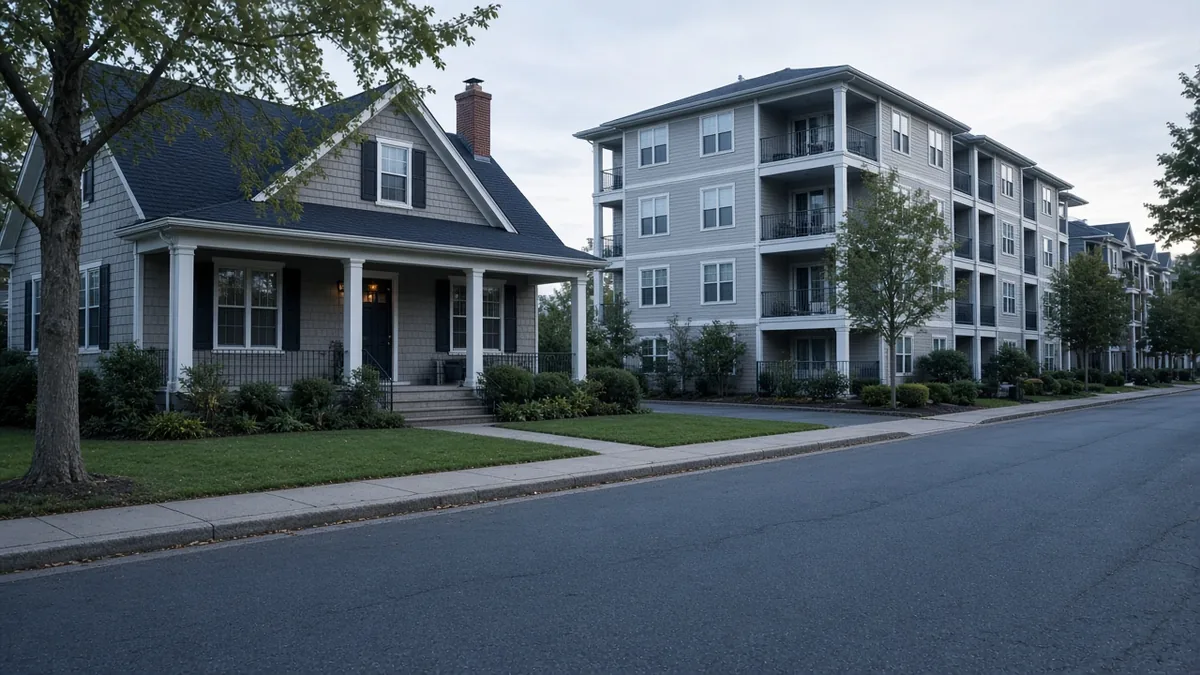
Single family vs multifamily investing is a trade of operating math, not a personality test. A single-family rental is one lease, one roof decision, and a 100 percent vacancy when that tenant leaves. A multifamily building spreads vacancy across units and stacks systems you maintain once for several doors: roof, boiler, parking, insurance. The loan file changes as the unit count crosses from one-to-four residential rentals into five-plus commercial multifamily. Picking a side because someone online prefers “doors” will not tell you which vacancy you can survive.
This is educational strategy, not a rate quote or an approval. An inquiry is not an application.
Single Family vs Multifamily Investing Changes the Vacancy Math
Start with an empty month, because that is where the slogans die.
A single-family home rented at $2,200 a month brings in $26,400 a year if it stays full. One month vacant, plus a week’s make-ready you pay out of pocket, costs you $2,200 of rent and the repair cash. That month is about 8 percent of the year’s rent. There is no other unit to cover the payment. If the loan, taxes, and insurance need $1,800 a month, you write that check from reserves. Investors who own one house feel vacancy as a personal cash event. It is simple to understand, and it is concentrated.
A six-unit building with the same $2,200 rent per unit has $13,200 a month of gross rent at full occupancy. One vacant unit is one-sixth of the income, not all of it. The payment can still be covered if the other five pay and you underwrote a vacancy line. You also have six refrigerators, a common roof, and a tenant who hears the neighbor. The vacancy is milder. The operations are not a house with extra keys.
That is the core comparison. Single-family investing gives you divisible exits: sell one house without selling the others, if you financed them separately. Multifamily investing gives you shared income and shared capex. Neither is “more passive” by default. A house an hour away with a difficult tenant is a job. A small building with an on-site system and a competent manager can be quieter, and the manager is a cost you must include. How property managers charge belongs in both models. Leaving it out is how a single-family “easy” deal and a multifamily “scale” deal both miss cash flow by the same fee.
The IRS recovery period is a related fork, not the reason to buy. Residential rental property is generally depreciated over 27.5 years when it qualifies, which is the framework in IRS Publication 946. A building that is actually nonresidential can fall on a 39-year life. Do not pick multifamily because you heard the depreciation is magic. Pick it because the rents cover the systems. Use a preparer for the life that fits the asset you bought.
Where the Loan File Splits
Financing follows the unit count more than your ambition.
One to four units. These can fit a business-purpose DSCR rental loan when you will not occupy them: rent versus the payment, reserves, and a residential appraisal. A single-family rental is the cleanest version. A duplex, triplex, or fourplex is still in that unit band. See DSCR for a single-family rental for the one-door case. You can own several houses. Each loan is its own lien unless you deliberately cross-collateralize them. Selling one house is then a payoff of one loan, not a negotiation about the pool.
Five or more units. This is multifamily in the commercial sense. HUD’s own multifamily refinance program, 223(f), is built for existing rental housing with five or more units, which is a useful public marker even if you never use that program. See the HUD 223(f) description. Local small multifamily is usually a commercial loan on NOI, not a bigger version of a house payment. Small multifamily commercial loans describe that file. Experience overlays show up here. A first investment is a more natural fit as a one-to-four rental than as an eight-unit with a commercial kitchen’s worth of mechanicals.
Scaling from houses to a building is a real transition, including how you think about reserves and management. The bridge is covered in scaling from 1–4 units to multifamily. Do not skip it by calling a six-unit “just three duplexes.”
Operations, Not Aesthetics
Run the same four lines on both so the comparison is honest.
- Income. Contract rent, not projected rent after a renovation you have not priced. On multifamily, use a rent roll. On a house, use one lease and a vacancy month.
- Operating costs. A house can look cheap because you ignore your own labor. A building looks expensive because the utility bill is visible. Put a management fee on both, even if you waive it to yourself, so the asset has to work without free hours.
- Capex. One roof on a house is the whole roof. One roof on a six-unit is still one roof, spread over more rent, until it is due and the bid is large. Model the replacement, not an average you found in a forum.
- Exit. Houses sell to owner-occupants and to investors, which can widen the buyer pool. A small multifamily sells mainly to investors on NOI. If NOI slips, the buyer pool and the price slip with it. That liquidity difference matters if you might need to sell one asset and keep the rest.
Short-term rental use tilts the house toward a hospitality operation. It does not make a single-family a multifamily. It makes the income less like a lease. Underwrite the slow season before you compare it with a twelve-month tenant in a walk-up.
Location still dominates both. A dull house in a deep renter pool can beat a handsome building in a town with one employer. The asset type does not rescue a demand problem.
A Way to Choose the Next Purchase
Buy the next single-family rental when you want a separate exit, you can survive a full vacancy month from reserves, and the payment works on a DSCR worksheet with honest rent. Buy the multifamily when you can underwrite a rent roll, you have reserves for a system and a unit turn at the same time, and you are ready for a commercial file if the building has five or more units.
Avoid the hybrid mistake: paying multifamily price for a house because “it could be a development,” or paying house-by-house prices that never beat the building’s cap rate once you count six roofs and six loans. This site does not finance construction or speculative development. Compare existing rentals with existing rentals.
If you already own houses and the next dollar would concentrate you in one roof anyway, the building’s shared systems may be the diversification, odd as that sounds. If you already own one building and have no reserves, another building is not scale. It is a second phone call when something leaks.
Ready to discuss business-purpose financing options for an investment property? Call (907) 841-1600 or use the contact form.
Frequently Asked Questions
Is multifamily always safer than a single-family rental?
No. One vacancy hurts a house more as a percent of income, and a building concentrates roof, insurance, and one location in a single loan. Safer is the version you reserved correctly. A house with several months of payments in the bank can be safer than a building bought with no repair account.
Does a fourplex count as multifamily?
In casual speech, yes. In loan files, one to four units usually stay in the residential rental lane, including DSCR products, and five units is the common step into commercial multifamily underwriting. Say the actual unit count so the document list is the right one.
Which one cash-flows better?
Whichever you bought at a price that works after vacancy, maintenance, taxes, insurance, and the real payment. A cheap house in a strong rent area can beat an expensive building with a pretty unit mix. Compare cash left after those lines, not the number of doors.
Can I finance several single-family rentals instead of one building?
Yes, often as separate investment loans, subject to reserve and exposure limits that tighten as the count rises. The advantage is selling one house without a release negotiation, and the cost is repeated closings and several roofs. Read any cross-collateral language before you sign it.
Will either path guarantee financing?
No. A single-family rental still needs rent support, reserves, and non-owner-occupied use for a DSCR file. A five-plus unit building needs income that covers commercial debt service. State the unit count so the conversation starts in the right product.
Have a property in mind?
Submit a confidential inquiry — business-purpose and investment property only.
Start InquiryDisclaimer: This article is for informational purposes only and does not constitute financial, lending, legal, or tax advice. Commercial & DSCR Loans is a marketing and referral information service — not a lender, broker, or financial institution. Content relates to business-purpose and investment property financing only. Disclaimer · Terms · Privacy