Financing a Net Lease Commercial Property
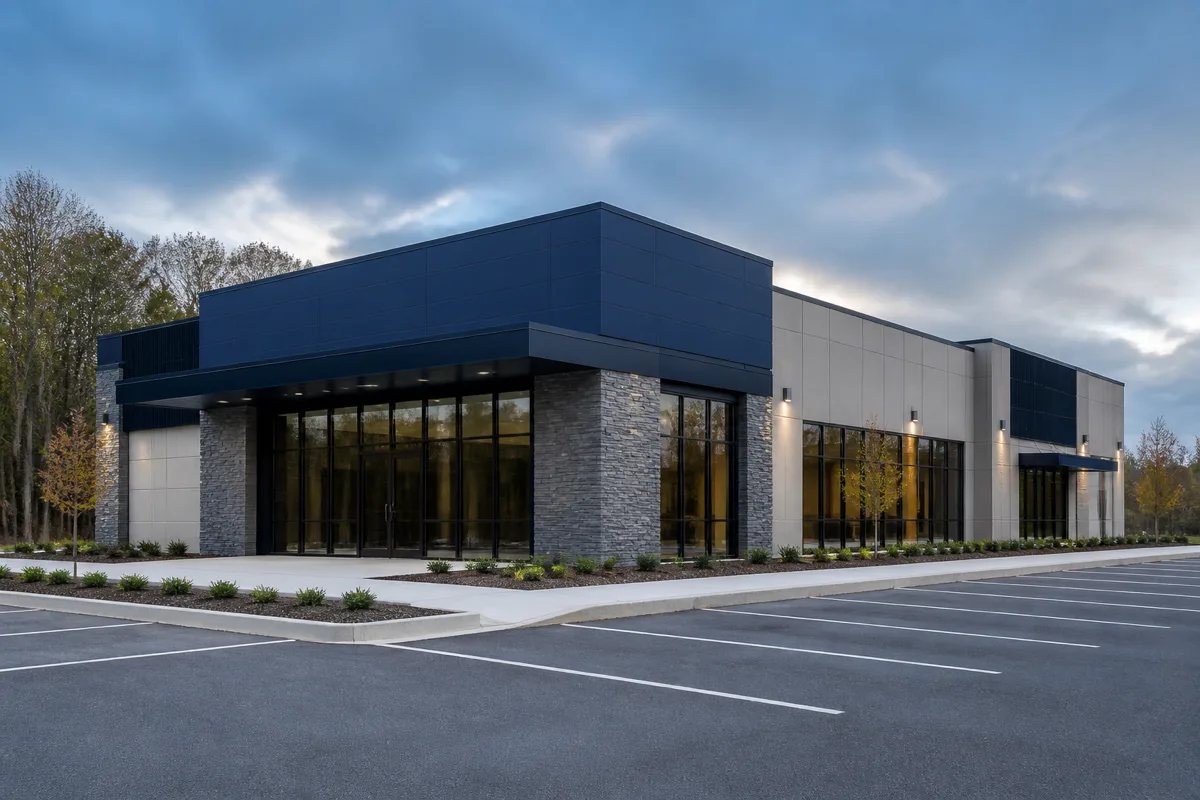
Financing a net lease commercial property (often called triple-net or NNN property) underwrites differently than a typical multi-tenant commercial building, because the loan’s risk profile leans heavily on a single factor: the tenant’s ability to pay rent for the length of the lease term.
What Makes Net Lease Different
In a triple-net lease structure, the tenant — not the landlord — pays property taxes, insurance, and maintenance costs directly, in addition to base rent. That structure produces a highly predictable income stream for the owner, since most of the variable expense risk shifts to the tenant.
Because income predictability depends almost entirely on one tenant’s creditworthiness and lease commitment (versus a diversified multi-tenant property where no single tenant’s departure sinks the whole income stream), net lease underwriting focuses heavily on:
- Tenant credit quality — publicly traded or otherwise well-rated tenants generally support stronger loan terms than an unrated or thinly capitalized tenant
- Remaining lease term — a lease with 10+ years remaining supports more aggressive financing than one nearing expiration
- Lease structure details — rent escalation clauses, renewal option terms, and any early termination rights the tenant holds
Loan-to-Value and Term Alignment
Lenders financing net lease property typically want the loan term to align reasonably well with the remaining lease term — financing a 25-year amortization against a tenant with only 5 years left on their lease creates refinance risk if that tenant doesn’t renew. Shorter remaining lease terms often mean either a shorter loan term, a lower loan-to-value, or both, to manage that mismatch.
Single-Tenant vs. Multi-Tenant Net Lease
- Single-tenant net lease (a standalone retail box, a bank branch, a pharmacy) concentrates all income risk in one tenant relationship. Financing terms lean heavily on that one tenant’s credit profile.
- Multi-tenant net lease centers (a small strip center with several NNN tenants) diversify tenant risk somewhat, though the property still needs strong occupancy and staggered lease expirations to avoid a cluster of leases coming due simultaneously.
Rollover Risk
“Rollover risk” describes what happens as a lease approaches its expiration — will the tenant renew, and at what rent? Lenders evaluate rollover risk closely on any net lease property being refinanced or purchased with a lease nearing its end, since a vacancy on a single-tenant property can eliminate the entire income stream overnight until a replacement tenant is found.
What Investors Should Verify Before Financing
- Estoppel certificate — confirms the lease terms as understood by both landlord and tenant match the actual lease document, catching any side agreements or unrecorded modifications
- Tenant financial disclosures (if available) — public companies file financials; private tenant credit may require a review of financial statements or a third-party credit report
- Co-tenancy and exclusivity clauses — provisions that could allow a tenant to reduce rent or terminate if certain conditions aren’t met (like an anchor tenant vacating a shared property)
- Renewal option pricing — whether renewal rent is fixed, market-rate, or tied to a specific formula, which affects long-term income projections
Cap Rate and Pricing Considerations
Net lease properties tend to price on cap rate — the property’s annual NOI divided by purchase price — rather than a per-square-foot comparison the way office or retail with active management might. Investment-grade, long-lease-term single-tenant properties in strong markets typically trade at lower cap rates (higher prices relative to income) because buyers are paying for stability. Shorter remaining lease terms, weaker tenant credit, or secondary/tertiary markets generally command higher cap rates to compensate for added risk.
This matters for financing because the purchase price an investor is willing to pay directly affects the loan-to-value math. Overpaying relative to the tenant’s remaining lease term and credit profile can make a deal harder to finance on favorable terms, even if the headline cap rate looks attractive compared to other asset classes.
Guarantees and Corporate Structure
Some net lease tenants operate under a corporate guarantee (the parent company backs the lease obligation) while others lease through a single-purpose subsidiary with limited assets. A corporate guarantee generally strengthens the credit profile lenders evaluate, since the parent company’s broader financial strength stands behind the lease. Confirm whether a lease is guaranteed at the corporate level or isolated to a thinly capitalized entity before assuming the tenant’s public reputation translates directly into lease security.
Frequently Asked Questions
Does the tenant’s business type affect financing?
Yes — tenant industry can matter. Recession-resistant or essential-service tenants (pharmacies, grocery-anchored, quick-service restaurants with strong sales history) are often viewed more favorably than tenants in more cyclical or e-commerce-vulnerable retail categories.
What happens if the tenant’s lease expires during my loan term?
This is the core rollover risk consideration. Lenders typically want a plan for this scenario built into the loan structure — either a loan term shorter than the remaining lease, reserve requirements, or a lower loan-to-value cushion to absorb potential vacancy.
Can I finance a net lease property with an unrated or private tenant?
Yes, though financing terms are typically more conservative — lower leverage, higher reserve requirements, or closer scrutiny of the tenant’s financial statements — compared to a property leased to a publicly rated, investment-grade tenant.
Is net lease financing the same as financing an owner-occupied commercial building?
No — net lease financing here refers to an investor purchasing or refinancing a property leased to a third-party tenant as a pure investment, not a business owner financing a building they occupy themselves.
How does lease escalation affect the loan?
Built-in rent escalations (fixed annual increases or periodic step-ups) generally strengthen the income projection over the loan term, which can support more favorable financing terms compared to a flat-rent lease with no escalation.
For background on retail and net lease property performance, see the International Council of Shopping Centers research library.
Have a commercial or mixed-use investment property in mind? Start with a confidential inquiry or call (907) 841-1600.
Related reading: Retail Investment Property Loan Overview, Commercial Loan LTV Guidelines for Investors, Mixed-Use Property Financing for Investors
Have a property in mind?
Submit a confidential inquiry — business-purpose and investment property only.
Start InquiryDisclaimer: This article is for informational purposes only and does not constitute financial, lending, legal, or tax advice. Commercial & DSCR Loans is a marketing and referral information service — not a lender, broker, or financial institution. Content relates to business-purpose and investment property financing only. Disclaimer · Terms · Privacy