DSCR Loan for Mixed-Use Property
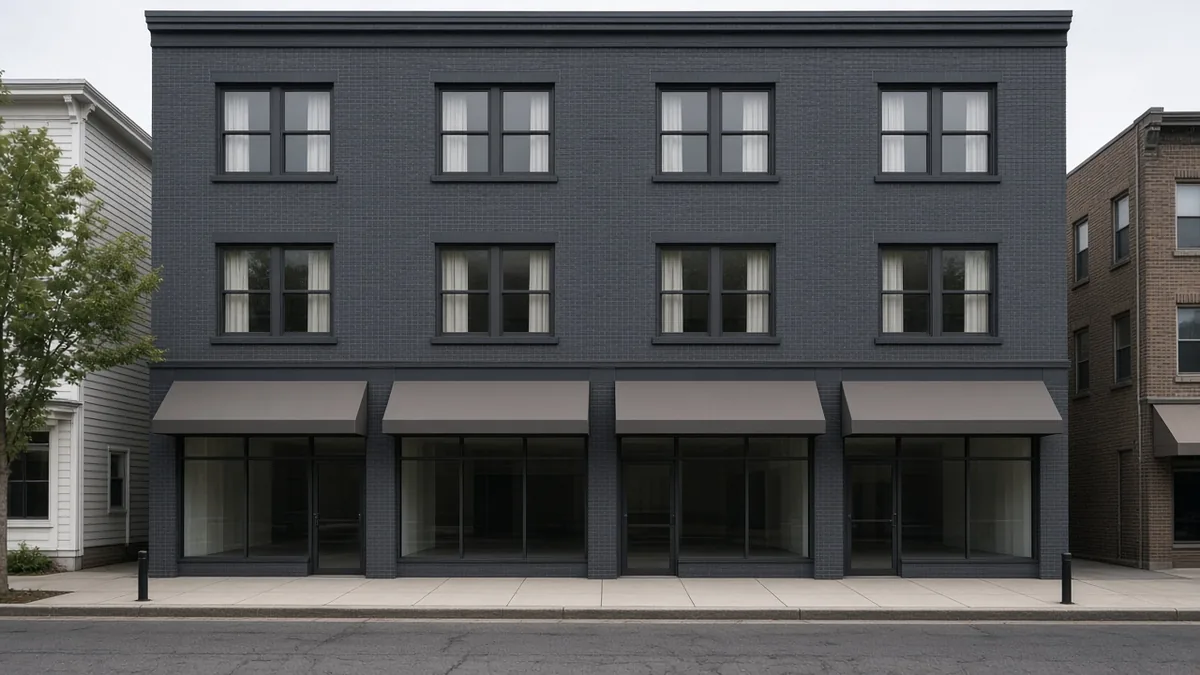
A DSCR loan for mixed-use property is a residential-dominant story until the commercial square footage, or the commercial rent, takes over the file. Dedicated 1–4 DSCR products are built for dwellings. A shop on the first floor does not automatically kill that path, but it changes how income is counted, which appraisal form is used, and whether the desk will stay in DSCR or send you to commercial mixed-use financing.
This is about an existing investment building with dwellings plus income-producing commercial space. It is not a church pitch, not a raw-land pitch, and not an owner-occupied primary-home pitch. If the “commercial” piece is a sanctuary, a vacant lot, or a house you live in, you are in the wrong article.
The tax side of mixed use is its own problem. IRS Publication 527 walks residential rental reporting. Allocation of building area between dwelling and business use is a real exercise. Underwriting will do a cruder version of the same split: what share of the asset is living space, and what share is a storefront.
When a DSCR Loan for Mixed-Use Property Stays Residential
Residential-dominant usually means most of the building is dwellings and most of the income is rent from those dwellings. A two-unit over a small office, or a fourplex with a tiny locksmith bay, can still look like a DSCR rental if the commercial lease is incidental and the capital provider’s matrix allows mixed-use.
The desk will ask for the commercial lease, the remaining term, and whether that tenant is month-to-month. Commercial vacancy is a different risk than a residential skip. A residential DSCR product that will take a vacant bedroom on market rent may refuse a vacant storefront, or haircut that income to zero until it is leased.
Zoning and certificate of occupancy matter more than they do on a single-family rental. If the commercial use is not legal, the residential DSCR story is already broken. Illegal conversions and unpermitted shop space are condition and title problems, not a coverage-ratio tweak.
How Commercial Square Footage Changes the File
Square footage is the first fork. Some overlays use a maximum commercial percentage of gross building area. Cross it and the file is no longer a 1–4 DSCR loan. It is a commercial mixed-use loan that may still use a coverage ratio as a commercial metric, which is not the same product as a dedicated rental DSCR loan.
Income mix is the second fork. If the storefront pays most of the building’s rent, the risk is tenant credit and lease term, not a residential rent schedule. That file belongs with commercial underwriting, rent rolls, and often a T12, even if people still live upstairs.
Documents change with the fork:
- Residential-dominant DSCR: dwelling leases, a rent schedule, plus the commercial lease as a supporting exhibit
- Commercial-dominant: full rent roll, operating statements, and a commercial appraisal
- Either path: evidence the uses are legal and insured
Insurance is not a detail. A landlord policy that ignores the shop, or a commercial policy that ignores the dwellings, will stall a close. Name the actual uses on the application.
What Dedicated DSCR Desks Often Refuse
Dedicated DSCR matrices frequently refuse special-use commercial, even when apartments sit above. A restaurant with a grease trap, a shop with environmental questions, or a space that would trigger a Phase I on a commercial file can push you out of the residential DSCR box. That is overlay, not a moral judgment on the tenant.
They also refuse files that are mixed-use in name only: a house with an unpermitted studio you call “office,” or a building you plan to convert. Conversion is a project. This article is about the building as it stands.
Do not assume a strong dwelling DSCR saves a weak commercial lease. Some desks will underwrite dwellings only and ignore commercial rent. That can help if the apartments carry the payment. It can kill the file if you needed the shop to make the ratio.
How to Package a Mixed-Use DSCR Scenario
Measure the split. Bring a simple floor-area table: dwelling square feet, commercial square feet, and which units produce which leases. Attach dwelling leases and the commercial lease separately. Note options, kick-outs, and percentage rent. Percentage rent is hard to count as durable DSCR income.
If the commercial tenant is related to you, say so. Related-party rent gets scrutinized on both DSCR and commercial desks. Arms-length leases with deposits and a payment history are easier to defend.
Run the coverage two ways: dwellings only, and dwellings plus commercial. If the deal only works with the shop, you should expect a commercial conversation, not a residential DSCR letter. How you calculate NOI becomes relevant the moment the file leaves the 1–4 DSCR form set.
A scenario is not approval. Overlays on commercial percentage, tenant type, and coverage all vary by capital source.
Estoppels, Access, and Why the Shop Still Matters
Even on a residential-dominant file, a commercial tenant can stall a close. Many desks want an estoppel that confirms rent, term, and deposits. If there is existing debt on the building, an SNDA may be required so lien priority and the tenant’s rights are not a surprise. If the shop shares parking or a driveway with the dwellings, the survey and insurance have to show that access.
If you are refinancing rather than buying, the same split still applies. The last close does not bind the next desk. A building that once passed as mostly residential can be treated as commercial mixed-use after the shop rent grows. Run the file as it stands now, not as it was labeled last time.
Exploring DSCR financing for an investment rental? Submit a confidential inquiry or call (907) 841-1600.
Frequently Asked Questions
Can I use a DSCR loan for mixed-use if half the building is retail?
Often no on a dedicated 1–4 DSCR product. When commercial area or commercial rent stops being incidental, the file is usually a commercial mixed-use loan. Some desks will still look at a coverage ratio. That is commercial underwriting, not a residential DSCR matrix with a storefront attached.
Does the commercial lease count in the DSCR ratio?
Sometimes in full, sometimes haircut, sometimes not at all. It depends on remaining term, tenant quality, and whether the product is allowed to take commercial income. Ask the desk which income they will count before you write an offer that needs the shop to clear coverage.
Is a live-work loft the same as mixed-use for DSCR?
Not always. A loft that is legally one dwelling is still a dwelling. A building with a separately demised shop and apartments is mixed-use. Zoning, the certificate of occupancy, and how the appraisal splits the spaces decide more than the marketing brochure.
Will a vacant storefront kill a residential-dominant DSCR file?
It can. Some overlays will underwrite dwellings only and ignore the empty bay. Others will not close until the commercial space is leased or they apply a vacancy load that breaks the ratio. Vacant commercial space is not the same as a vacant bedroom on a market-rent schedule.
Have a property in mind?
Submit a confidential inquiry — business-purpose and investment property only.
Start InquiryDisclaimer: This article is for informational purposes only and does not constitute financial, lending, legal, or tax advice. Commercial & DSCR Loans is a marketing and referral information service — not a lender, broker, or financial institution. Content relates to business-purpose and investment property financing only. Disclaimer · Terms · Privacy