DSCR Loan for Fourplex Investment Properties
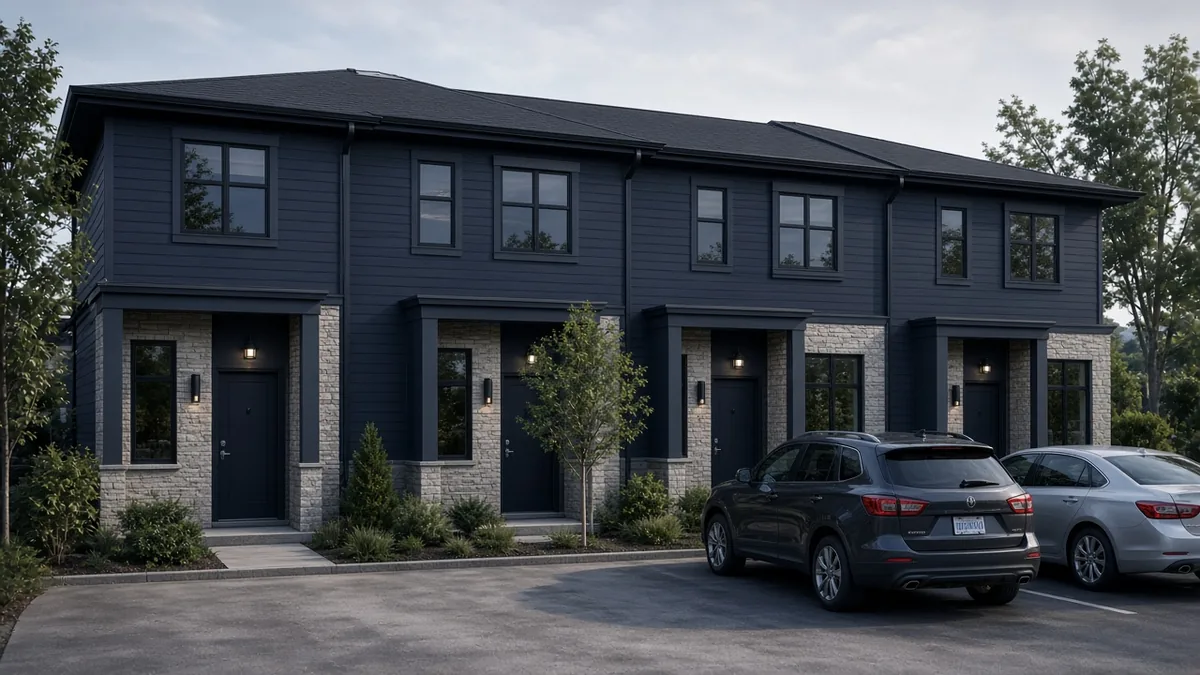
A DSCR loan for fourplex property is a fully investment 4-unit file. All four doors are treated as rental income. The borrower does not occupy a unit to “help the ratio.” The appraisal is the Small Residential Income Property Appraisal Report—Form 1025—with a unit-level rent schedule, not a single-family 1004 and a handshake story about a house hack. If you plan to live in one unit and rent the other three, you are in a different product conversation. This article is the investment fourplex only.
That distinction is the whole underwrite. A 4-unit sitting on the line between residential 1–4 and small commercial multifamily still uses residential-style DSCR mechanics when it is a dedicated rental product: income divided by PITIA, leases or market rent, reserves, and LTV. What changes versus a single-family rental is the evidence. You are proving four income streams and four physical units on one legal parcel.
How a DSCR Loan for Fourplex Income Is Underwritten
Start with the same formula used on a 1-unit rental:
DSCR = Gross monthly rental income ÷ monthly PITIA
Income is the qualifying rent for all four units, usually the lower of in-place leases and the appraiser’s market-rent schedule. PITIA is one mortgage payment plus taxes, insurance, and any association dues for the building. Four units do not mean four mortgages. They mean four rent lines supporting one obligation.
Example (educational, not a quote):
| Item | Monthly |
|---|---|
| Unit A lease | $1,350 |
| Unit B lease | $1,325 |
| Unit C vacant — market rent on 1025 | $1,300 |
| Unit D lease | $1,375 |
| Qualifying rent (after any program haircut on the vacant unit) | $5,350 |
| PITIA | $4,200 |
| DSCR | 1.27x |
A vacant unit is not free income. Many programs will use market rent from the 1025, a fraction of market rent, or they will want a lease in hand before they count it at full value. Vacant property DSCR loan is written for a 1-unit empty house; the same conservatism shows up on an empty fourplex door.
If the ratio is short, the fix is still property math: more down payment, a lower payment, or stronger rent support. How to increase DSCR on a rental property applies unit by unit here.
Form 1025 Is the Rent Support, Not a Decoration
Form 1025 is the GSE small residential income property appraisal. The Appraisal Institute and the GSE form library treat it as the assignment for 2–4 unit residential income property. The report includes a comparable sales grid and a comparable rent schedule. That rent schedule is often the document that sets qualifying income when a lease is stale, missing, or above what the market will bear.
What reviewers actually use from the 1025:
- Unit mix and square footage. A 3-bed / 1-bed / 1-bed / studio mix does not get four copies of the 3-bed rent.
- In-place versus market rent. A long-term tenant at $950 in a $1,300 market may be qualified at $950 until the lease rolls, depending on the program.
- Condition and deferred maintenance. Four-unit buildings hide roof, sewer, and parking issues that a 1-unit listing photo does not. Condition can kill both value and rent.
- Accessory income. Laundry or storage is not automatically added to DSCR. If it is not on the rent schedule or a durable lease, do not count it in your own worksheet.
Order the 1025 as a 4-unit income assignment. A 1004 on “the owner’s unit” plus a letter about the others is the house-hack package this product is not.
The Appraisal Institute’s residential appraisal resources are a useful public reference for why income-property assignments need a rent schedule, not just a sale-comp grid.
Fully Investment Occupancy — Not a House Hack
Say the occupancy in one sentence on page one of the file: non-owner-occupied, all units for rent. Then make the documents match.
- Vesting is typically an LLC or another investment entity, or an individual investor who will not occupy. DSCR loan for LLC vesting covers the entity paper.
- Insurance is a landlord or dwelling-fire landlord policy, not a homeowner’s policy with an occupancy endorsement that says you live there.
- Utility and mail story should not show the borrower as the occupant of Unit 2.
- The purchase contract should not include an owner-occupancy rider.
House-hack content belongs on residential consumer sites. This site’s fourplex lane is the investment building. The property-type companion is financing a fourplex investment property, which sits next to this DSCR-specific piece.
If the asset is actually five to eight units, you have left 1–4 DSCR territory. 5-8 unit multifamily loan and experienced-investor overlays apply. Do not force a fourplex DSCR narrative onto a 6-unit.
Rent Roll and Leases Win or Lose the File
A fourplex file without a clean rent roll is a delayed file. DSCR loan rent roll requirements is the checklist. For a 4-unit, the roll should show, per unit:
- Unit ID, bedrooms, bathrooms, and tenant name (or “vacant”).
- Lease start, end, and current monthly rent.
- Security deposit held.
- Who pays which utilities.
- Any concessions still being earned (half-month free, etc.).
Attach the four leases. If a unit is month-to-month, say so; some programs treat that as a weaker income line. If you just bought the building and the seller’s roll is sloppy, rebuild it from the leases before anyone else does.
Long-term residential leases are the cleanest DSCR story. Long-term rental DSCR loan is the product explainer. Short-term use of all four units is a different evidence stack (short-term rental DSCR loan) and is not the default fourplex path.
Building-Level Costs That Fourplex Buyers Miss
PITIA is not the only cash that leaves the account. Underwriting may not subtract every operating expense from DSCR the way a commercial NOI test does, but you still pay them. Price the building with:
- Vacancy and turnover on four doors, not one.
- A roof, parking lot, and shared mechanicals that serve the whole asset.
- Higher liability insurance than a single rental house.
- Water or trash billed to the owner.
- Local 1–4 licensing or inspection rules.
DSCR can clear while cash-on-cash is thin if you ignored those lines. What is a good cash on cash return is the investor math after the loan math.
HUD and Census both treat 2–4 unit buildings as residential housing stock, not commercial real estate. That classification is why a fourplex often stays in a 1–4 DSCR box instead of a small multifamily commercial loan box—until unit count or loan size pushes it over.
What to Send With the Inquiry
- Purchase contract or refinance payoff and a sources-and-uses.
- Unit-level rent roll plus leases.
- 12 months of operating history if you already own it (deposits, taxes, insurance, repairs).
- Entity documents and insurance quote for landlord coverage.
- A note on any unit you occupy or plan to occupy—if that note is not “none,” stop and change product lanes.
Exploring a DSCR loan for fourplex investment property? Submit a confidential inquiry or call (907) 841-1600.
Frequently Asked Questions
Can I live in one unit and still use a DSCR loan for fourplex financing?
Not under the investment fourplex path described here. Occupying a unit turns the story into a house hack or a consumer occupancy file. A dedicated DSCR rental product wants all four units as investment income and Form 1025 rent support for the building as a rental.
Does every fourplex DSCR loan require Form 1025?
A 2–4 unit residential income assignment is typically a 1025 (or the equivalent small-income form the appraiser’s scope calls for), including a rent schedule. A single-family form that ignores three of the four doors will not support the income side of the ratio.
How is a vacant unit counted in fourplex DSCR?
Programs vary. Common treatments are market rent from the 1025 rent schedule, a haircut to that market rent, or a requirement to lease the unit before it counts at full value. Do not pencil four occupied rents if one door is empty.
Is a fourplex considered commercial for DSCR purposes?
Unit count 2–4 is generally still in the residential 1–4 DSCR family. Five or more units is where commercial or small-multifamily overlays, and often experienced-investor rules, take over. Loan size and entity structure can still add commercial-looking paper on a 4-unit.
Do I need four separate leases in the file?
Yes if four units are leased. The rent roll is the summary; the leases are the evidence. Month-to-month and undocumented cash tenants are weaker lines and should be flagged before underwriting finds them.
Have a property in mind?
Submit a confidential inquiry — business-purpose and investment property only.
Start InquiryDisclaimer: This article is for informational purposes only and does not constitute financial, lending, legal, or tax advice. Commercial & DSCR Loans is a marketing and referral information service — not a lender, broker, or financial institution. Content relates to business-purpose and investment property financing only. Disclaimer · Terms · Privacy