DSCR Loan After a House Hack Exit
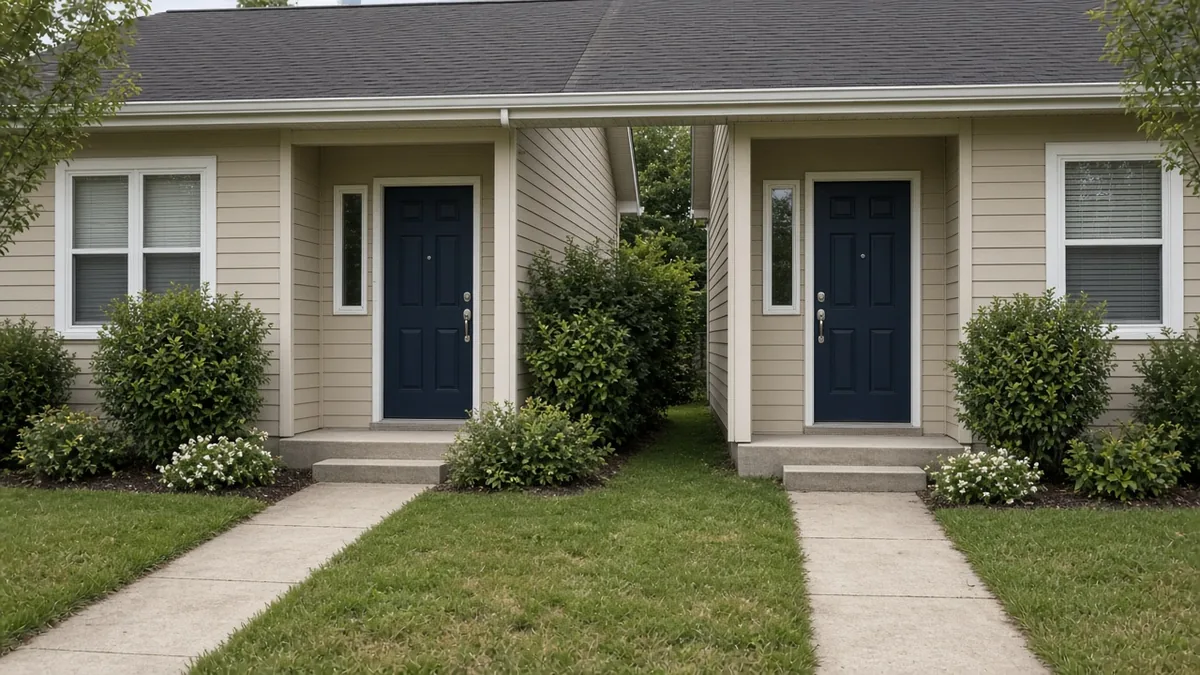
A DSCR loan for 2-4 unit house hack exit is the business-purpose file after you move out of a duplex, triplex, or fourplex you had been living in. One unit was your home. The others may already have been rented. When you leave, the building is a rental, and the financing question is whether the rents cover the payment. This article is that exit. It is not a guide to buying a primary residence, and it does not explain how to finance the years you lived there.
The ratio is the center of the new file. One common version is DSCR = rent used for qualifying ÷ debt service. Debt service is usually principal, interest, taxes, insurance, and association dues when they apply. Another version uses net operating income over annual debt service. The program names the version. Your old household budget, and the rent you “saved” by sleeping in unit one, is not a version the new file will use.
Illustrations here are not a rate quote and not an offer of credit. An inquiry is not an approval.
What a DSCR loan for 2-4 unit house hack exit reviews
The rent roll has to include every unit, including the one you occupied. A lease on the other units is evidence. The unit you are leaving is either leased, or it is vacant. A vacant former home is a vacant-unit question, not a footnote. Programs differ on whether they want a signed lease before closing, a market-rent opinion, or a vacancy factor. Ask which one applies to the unit that does not have a tenant yet.
House hacking compared with investment DSCR is the background contrast between living in a unit and financing a building as an investment. Use it to see why the two files feel different. Start this page only when the living-there period is ending. Do not use either page as a checklist for purchasing a home to occupy.
Unit count still matters. A fourplex DSCR file and a duplex investment file are the property-type pages for buildings in this range. Bring a rent roll with one line per unit: beds, rent, lease end, and who pays utilities. A single blended “building rent” hides the empty unit you used to live in.
Seasoning is the other clock. If you are refinancing a loan that was made while you occupied a unit, the new program may want time on title, leases, and canceled checks. Seasoning requirements vary by program. This page will not assign a number of months. Ask for the rule that matches a former occupant of a two-to-four-unit rental, and put the move-out date next to it.
Insurance and the day the use changes
The policy has to change with you. A form written for an owner who lives in the building is the wrong form once every unit is leased. Converting a primary residence to a rental includes that handoff, and landlord coverage versus a homeowners form is the occupancy detail. Make the call before the new tenant gets keys. Loss of rents belongs on the rental form if you want the payment to have a source while a covered loss is repaired. The old additional-living-expense thinking was about where you would sleep. You will not be sleeping there.
Tell the carrier which units are rented, that you no longer occupy any of them, and the date you will vacate. A weekend stay is still a fact. If you keep a key and a bed, say so. The form should match the truth.
The loan file will want evidence of the rental policy, with the capital provider named the way its checklist requires. A binder that still shows you as the occupant is a condition, not a finish line. Budget the new premium in the same month you budget the new rent. Landlord coverage often costs more than the policy you had while you lived there, because the use changed.
Taxes when the home unit becomes a rental
Publication 527 says you cannot take depreciation while the property is in personal use, and that you can begin when you change it to business or income-producing use. You place it in service for that use on the date of the change. The publication’s example is a person who moved out, made repairs, and listed the house for rent. The property was placed in service when it was available for rent, not on the later day a tenant moved in. A two-to-four-unit building can have a split history: units that were already rentals, and a unit that becomes one when you leave. Ask the preparer how to treat the unit that changes, instead of applying one date to the whole deed if the facts differ.
The same publication says that if you used the property personally before the change, the basis for depreciation is the lesser of adjusted basis or fair market value at the time of the change. Reconstruct basis before you need the number. Rental depreciation is the longer page. This article does not state a recovery period or a tax rate.
Personal use after you “move out” can pull the unit back toward residence rules. IRS Topic 415 says you are considered to use a dwelling as a residence if you use it for personal purposes during the year for more than the greater of 14 days, or 10 percent of the days you rent it at a fair rental price. A few weekends in the old unit can matter. If the exit is real, stop living there. If it is not real, do not describe the building as a full rental on a financing application.
A rent roll that includes the unit you left
Hypothetical duplex, labeled as arithmetic. Unit B is leased at $1,600. You are moving out of unit A and have a signed lease at $1,500 starting next month. Debt service on the loan you want is $2,400.
If the program uses both leases: DSCR = ($1,600 + $1,500) ÷ $2,400 = 1.29.
If unit A is still vacant and the program will not count unsigned rent, the numerator may be $1,600, and the ratio is 0.67. Same building. The empty unit you used to live in is the entire swing. A fourplex works the same way with more lines. Three leased units do not hide the fourth if the program refuses to count it.
Price the taxes and the new insurance inside that debt service before you celebrate the 1.29. A program floor is the program’s number. Clearing a worksheet does not clear a file. Reserves, title, and the leases still have to match what you told the application about occupancy. Say that you are moving out. Say the date. An application that still calls the building your home is the wrong story for this product.
Exploring DSCR financing for an investment rental after you have moved out? Submit a confidential inquiry or call (907) 841-1600.
Frequently Asked Questions
Is this article about buying a duplex to live in one unit?
No. It is about the exit, after you move out, when the two-to-four-unit building is being looked at as an investment rental. Financing the years you occupied a unit is a different product and a different set of rules. Do not use this page to plan that purchase.
Can the unit I just left count in the DSCR if it is empty?
Sometimes, and sometimes not. Programs may want a signed lease, a market-rent opinion, or they may exclude a vacant unit. Ask before you rely on rent that is not yet in a lease. The other units’ rent does not automatically fill the gap.
Do I have to change insurance when I move out?
Yes, if the current form assumes you live there. A landlord policy should be in place for a building you no longer occupy, with the rent coverage you intend to rely on. Tell the carrier the move-out date and keep the new declarations for the loan file.
When does depreciation start on the unit that was my home?
Publication 527 says depreciation for income-producing use begins when the use changes, and its example treats the property as placed in service when it is available for rent. Basis for a converted unit is the lesser of adjusted basis or fair market value at the change. Your preparer applies that to the unit that actually converted.
Will a refinance be available the month I move?
Not by default. Seasoning, leases, and occupancy history are program rules, and they differ. An inquiry is not an approval. Ask what evidence of move-out and what lease status the file needs, and expect the calendar to follow that list.
Have a property in mind?
Submit a confidential inquiry — business-purpose and investment property only.
Start InquiryDisclaimer: This article is for informational purposes only and does not constitute financial, lending, legal, or tax advice. Commercial & DSCR Loans is a marketing and referral information service — not a lender, broker, or financial institution. Content relates to business-purpose and investment property financing only. Disclaimer · Terms · Privacy