DSCR Loans for Rural Areas Explained
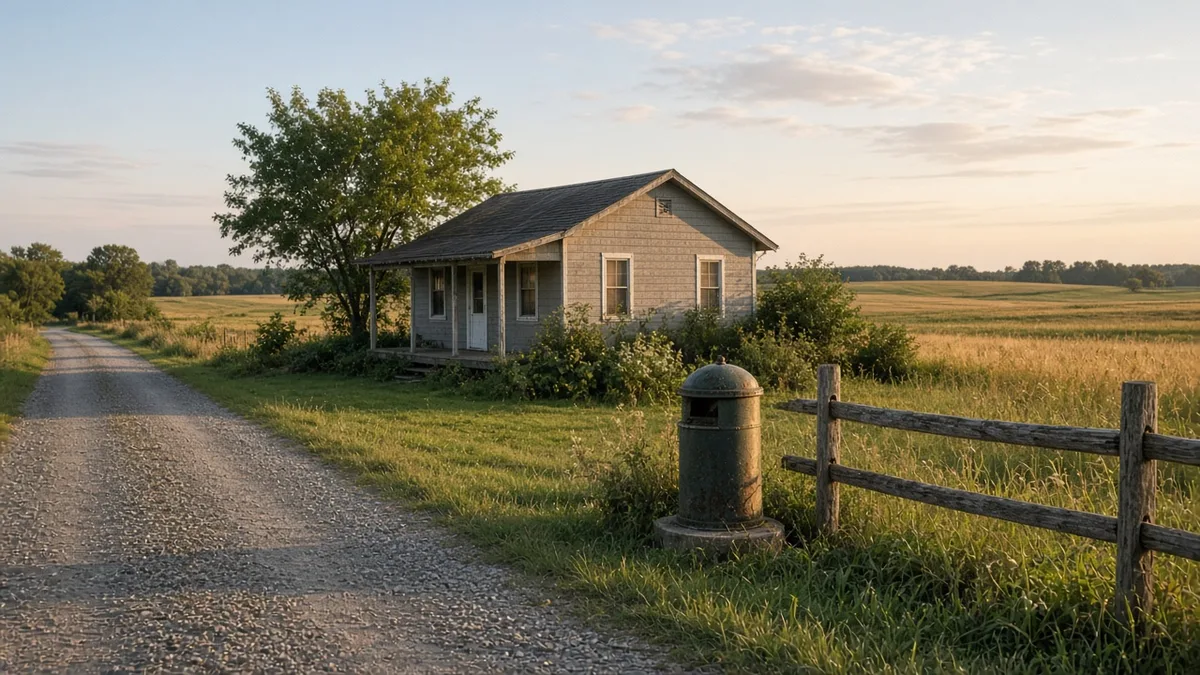
DSCR loans for rural areas finance an existing house that is, or will be, a rental, and the file slows down on access, the well, the septic system, and comparable sales. The ratio is the same one used on a subdivision rental: rent divided by the payment, including taxes and insurance. The property questions are heavier because the house often sits on a private road, drinks from a well, and has few recent neighbors that actually sold.
The collateral is that house and the land it occupies as one rental property. Extra acreage can make the appraisal harder. It does not change the assignment into something other than a house file.
Illustrations here are not a rate quote and not an offer of credit. An inquiry is not an approval.
What DSCR loans for rural areas review on the house
The Census Bureau’s urban-rural classification calls rural all population, housing, and territory outside an urban area. On that page, an urban area needs a densely settled core of at least 2,000 housing units or a population of at least 5,000. That is a statistical map. A financing file can still call a property rural because the road is private, the utilities are on site, or the appraiser has to drive a long way for comps. A house can also sit outside an urban area and still be an ordinary rental if access and systems are clean. Use the Census label to understand the map. Use the four property tests below to understand the file.
Legal access. Title needs a way from a public road to the house that can be insured. A recorded easement, a county-maintained road, or frontage the survey can show will usually answer it. A driveway that crosses a neighbor by handshake, a gate the neighbor can lock, or a road that disappears in one season will not. The lease you hope to sign does not create access. The recorded right does. If the easement exists, read who maintains the surface and who pays for it. A perfect legal description with a ruined road is still a rent problem, because tenants and vendors have to arrive.
The well. Many rural house rentals use a private well. The file often wants a recent flow test, and sometimes a water-quality test, plus the location of the well relative to the septic system. A shared well needs a recorded agreement that states the borrower’s right to the water, the share of repair costs, and what happens if the pump fails. An informal split with the house next door is a story. The agreement is the document. If the well is on another parcel, the easement for the line and the right to enter for repairs belong in title, not in a text message.
The septic. An inspection that describes the tank, the field, and whether the system matches the bedroom count is the usual request. A listing that advertises three bedrooms on a system sized for two is a condition issue, not a rounding error. A failed field is a repair conversation, often with an escrow or a completion requirement, on a house that already exists. Budget the inspection early. A report that arrives after the appraisal tends to restart the closing calendar.
Comps and rent. Rural sales are fewer, farther, and less alike. Site size, outbuildings, condition, and distance to a grocery or a job center drive adjustments that would look extreme on a tract street. Appraisal gaps show up when the contract followed a hopeful price and the closed sales would not. Market rent is thin for the same reason. A long-term lease already in place is useful evidence. A vacant house leans on the appraiser’s rent schedule, built from whatever rentals can be found. Long-term rental DSCR files live or die on that rent being believable, whether the house is rural or not.
Single-family rental financing is the product shape. Rural is a property overlay on top of it.
How the payment changes after the quotes
Insurance is where rural files quietly rewrite the ratio. Distance to a fire station, a volunteer department, a long driveway, or a high wildfire exposure can lift the landlord premium above the figure in the spreadsheet. Insurance sits inside the payment. A higher premium lowers coverage even when the rent stays put.
Illustration only. Market rent $1,600. The first draft of the payment, with a suburban insurance guess, is $1,250, so coverage is $1,600 ÷ $1,250 = 1.28. The landlord quote comes back $2,400 a year higher than that guess, which is $200 a month. The payment is now $1,450. Coverage is $1,600 ÷ $1,450 = 1.10. Same house, same tenant, different carrier reality. Property insurance requirements are worth reading before the offer, not after the ratio already felt safe.
Taxes can surprise in the other direction or the same one. A large site is not always taxed like a small lot, and a sale can reset the bill. Use the post-sale estimate in the ratio if the jurisdiction reassesses on transfer. Last year’s bill on a long-held family parcel can be a poor proxy for the buyer’s payment.
Utilities the tenant pays directly, such as electric service to the house, stay out of the payment when the lease says so. The well’s electric bill, septic pumping, and road-maintenance dues are easy to forget because they are not on a city utility statement. If the landlord pays them, they belong in the operating picture even when the DSCR formula itself is a rent-over-PITIA test. A tenant who is surprised by a shared road invoice becomes a vacancy.
What to order before the appraisal
Rural diligence is slower because the vendors drive farther and the records sit at a county counter. Order the items that can kill the file first.
- A title commitment that speaks to access, including any easement book and page.
- Well and septic inspections, plus the shared-well agreement if the well is shared.
- A landlord insurance quote that uses the real distance and how the house is built, not a guess from a different county.
- A list of the closed sales and rented houses you actually know, for your own price discipline. The appraiser will choose the comps. You should still know whether any exist.
- Photos of the road, the wellhead, the septic lids if they are visible, and the mechanicals. Condition issues become repair escrows late, when the calendar is short.
A house that fails access or has no lawful waste system is not “almost” a rental file. Fix the record or the system, then bring the address back. A house that simply has few comps can still be reviewed. Expect a wider range of value opinions, a rent conclusion you should stress downward, and a longer appraisal turn time. Build the offer’s inspection period for that pace.
Acreage needs a straight story. A rental house with a yard, a garden, and a reasonable site is a house. A price that only works if someone later splits the land and sells parcels is a different business plan, and it does not belong in the rent used for this loan. Underwrite the house as a rental on the land you are actually buying. If the comps are all small lots and your site is much larger, the appraisal may give the extra land little weight or a large adjustment. Either result can gap the contract. Negotiate as if that gap is possible.
Experienced investors looking at five to eight units should treat that as its own product, with experienced-investor overlays. A rural house rental is the one-unit case this article is about. Do not scale the well-and-septic checklist into a promise about a larger building.
How to read a thin market without inventing rent
When only two sales exist and neither matches, the honest move is a wider net and larger adjustments, disclosed, rather than a rent you need in order to hit a ratio. If the only way the payment works is a rent no nearby house has achieved, the file is telling you the price is the problem. Offer a price that survives a lower rent, bring more cash so the payment drops, or wait for a house with better evidence.
Vacancy between tenants is also longer in some rural markets because the tenant pool is smaller. A ratio that assumes twelve paid months can disappoint if the house sits for two. Keep a reserve for that gap in cash, separate from whatever month-count the file asks you to show. The guideline reserve and your operating reserve are both real. One satisfies a checklist. The other keeps the payment current while you look for the next tenant.
DSCR loans for rural areas are ordinary rental loans with a stricter property interview. Access that title will insure, a well and a septic system that inspections can describe, and comps a careful appraiser can explain are the three that decide whether the ratio ever gets a serious look.
Exploring DSCR financing for an investment rental? Submit a confidential inquiry or call (907) 841-1600.
Frequently Asked Questions
Do rural DSCR loans finance an existing house rental?
Yes. The file in this article is an existing house used as an investment rental, including its site, its access, and its water and waste systems. The coverage ratio still compares rent with the payment, and county location changes the property questions without replacing that rent test.
Does the Census rural label decide whether a file can be reviewed?
The Census definition draws a statistical line around urban areas and calls everything else rural. A financing review cares whether title can insure access, whether the well and septic are documented, and whether an appraiser can support value and rent. A house can be rural on the map and still be a clean file, or close to a city and still stall on a private road.
What if the only road to the house is private?
Title needs a recorded right to use that road, reaching a public road, that a title policy can insure. A neighbor’s permission, a gate you do not control, or a maintenance fight with no agreement is a common reason rural files stop. Ask for the easement documents before you spend money on an appraisal.
How far can comparable sales be?
Far enough that the appraiser can find closed sales a reader will believe, and no farther than the adjustments can explain. Rural assignments often travel well beyond a subdivision radius, with larger adjustments for site, condition, and location. If you cannot name a single relevant sale, expect a difficult appraisal and price the offer accordingly.
Do well and septic inspections replace the appraisal?
They answer water and waste. The appraisal answers value and market rent, which feed the loan amount and the coverage ratio. You typically need both. A clean septic report does not set the rent, and a strong rent conclusion does not prove the field is sized for the bedrooms in the listing.
Have a property in mind?
Submit a confidential inquiry — business-purpose and investment property only.
Start InquiryDisclaimer: This article is for informational purposes only and does not constitute financial, lending, legal, or tax advice. Commercial & DSCR Loans is a marketing and referral information service — not a lender, broker, or financial institution. Content relates to business-purpose and investment property financing only. Disclaimer · Terms · Privacy