Repair vs Improvement on a Rental
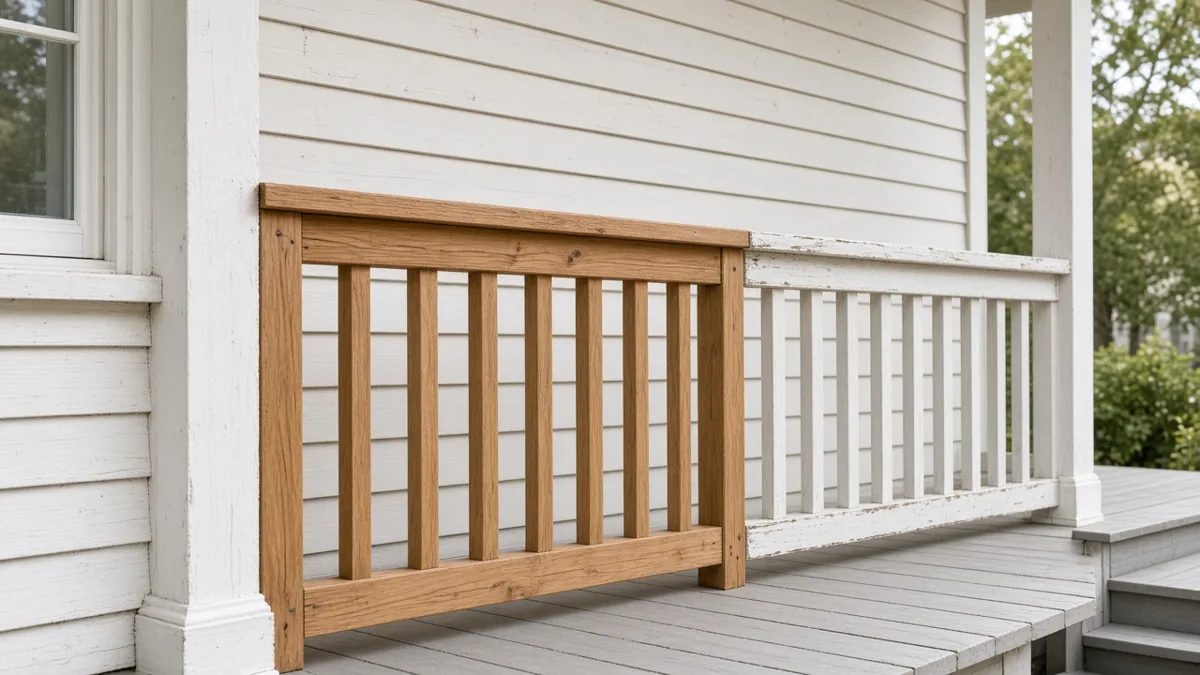
Repair vs improvement rental property is the line between a cost you may deduct now and a cost you must capitalize. Publication 527 says an expense for repairing or maintaining a rental may be deducted if you are not required to capitalize it. The same publication says you must capitalize any expense you pay to improve the property. An expense is an improvement if it results in a betterment, restores the property, or adapts it to a new or different use. The capitalized cost then sits in basis and is recovered over time.
These figures are an illustration of the classification. They are not a tax opinion. An inquiry is not an approval. Your invoices and your facts control the result.
Repair vs Improvement Rental Property Under the Federal Test
Publication 527 sorts improvements into three ideas.
Betterments include expenses for fixing a pre-existing defect or condition, enlarging or expanding the property, or increasing its capacity, strength, or quality.
Restorations include replacing a substantial structural part, repairing damage after you have adjusted basis for a casualty loss, or rebuilding the property to a like-new condition.
Adaptations include altering the property to a use that is inconsistent with the ordinary use you had in mind when you began renting it.
If the work does not land in those buckets, and no other capitalization rule applies, the maintenance pattern is a current deduction: you spend the money to keep the property in operating condition, and you deduct it against rental income in the year you pay it, if you are a cash-basis filer and the passive-activity rules allow the deduction.
A $380 invoice to patch a leaking section of pipe, so the existing system works again, is the maintenance pattern when it does not enlarge the system, does not replace a substantial part of it, and does not rebuild the unit to like-new. You deduct the $380. You do not add it to basis.
A $14,000 roof replacement is on Publication 527’s own list of improvements. Table 1-1 in that publication includes a new roof, a heating system, central air, a water heater, kitchen modernization, and flooring among the examples of improvements. You capitalize the $14,000. You add it to the capital account. You recover it through depreciation, not through a one-year repair line. The straight-line life for a structural improvement on a residential rental is explained in how depreciation works on a rental.
Turnover paint, done so the next tenant can move into an ordinary unit, follows the maintenance pattern for most rentals: it keeps the unit rentable. A project that rebuilds the unit to a like-new condition falls under the restoration test and may have to be capitalized. The difference is the scope on the invoice, not the word “paint” in the contractor’s email.
| Work | Publication 527 pattern | What you do with the cost |
|---|---|---|
| Patch a leaking pipe section | Repair or maintenance, when it fails the three tests | Deduct now, if otherwise allowed |
| Turnover paint on an ordinary unit | Usually maintenance | Deduct now, if otherwise allowed |
| New roof | Improvement (Table 1-1) | Capitalize and depreciate |
| Kitchen modernization | Improvement (Table 1-1) | Capitalize and depreciate |
| Rebuild the unit to like-new | Restoration | Capitalize |
Why the Label Changes Basis and the Bank Account
A deducted repair reduces taxable rental income now, if you can use the deduction. It does not increase basis. Rental property cost basis leaves deductible repairs out of the capital account on purpose. Publication 551 says amounts you can deduct as current expenses are not added to basis.
A capitalized improvement does the reverse. You do not deduct the $14,000 in the year you pay it. You add it to basis and depreciate it. Cash left the account in a lump. The tax deduction arrives in slices over the recovery period. Your bank account and your tax return will disagree in the year of the roof, and they should. If you deduct the roof and also depreciate it, you have taken the same dollars twice.
The sale cares which choice you made. A repair you deducted is already out of basis. An improvement you capitalized is still in basis, reduced by the depreciation you were allowed to take on it. That adjusted basis is what a later gain computation uses. Mislabel a roof as a repair, deduct it, and also forget it at the sale, and the basis will be wrong in both years. Keep one file that shows the classification you actually used.
Publication 527 tells you to separate the costs of repairs and improvements and to keep accurate records, because you will need the cost of improvements when you depreciate the property and when you sell it. A single bid that mixes a roof and a pipe patch needs a split. If the contractor will not split it, you may have to treat more of the invoice as a capital item than the patch alone would require. Ask for separate invoices before the work starts. The habit is cheap. Reconstructing it at tax time is not.
Safe Harbors Exist, and They Have Their Own Rules
Publication 527 points to two ways a cost might still be deducted even after you have started down the improvement path. A de minimis safe harbor, if you elect it for the rental activity for the tax year, can let you deduct certain small acquisition or production costs as rental expenses. A routine maintenance safe harbor can let you deduct costs that would otherwise look like improvements, when the work fits that safe harbor. The publication sends the election and the details to the IRS tangible-property guidance. This page does not restate those dollar tests. Read them before you rely on them. If you skip the election, or the work misses the safe harbor, you are back to betterment, restoration, and adaptation.
Do not invent a personal cutoff, such as “anything under a round number is a repair.” The statute and the publication do not work that way. A small invoice can still be a betterment. A larger invoice can still be maintenance if the facts are maintenance. The three tests come first. The safe harbors are additional, and they are specific.
Your own unpaid time is not a deduction and is not basis. Materials you buy follow the repair-or-improvement test. Hours you never pay yourself do not become a number on either side. A contractor’s labor that you do pay follows the invoice.
The Loan File Uses a Different Question
A financing review often holds back funds for condition items, or it asks for a repair escrow before it will close. That is a credit question: will the property be in the condition the file requires. The tax question is still betterment, restoration, or adaptation. The same roof can be an escrow item in the loan and a capital improvement on the return. Property-condition repairs in a loan file explains the holdback. It does not reclassify the invoice for Publication 527.
A replacement reserve is a budgeting tool. Funding the reserve each month is not, by itself, a repair deduction or a capital improvement. The deduction or the basis increase happens when you spend the money and the invoice meets one test or the other. Replacement reserves belong in the operating plan and sometimes in NOI. They are not a shortcut around the capitalize-or-deduct choice. When the roof is finally paid from that reserve, classify the roof then.
Cash flow can subtract a reserve every month and can also subtract a real repair when it hits. If you do both for the same future roof, you have double-counted the cash need. Pick one presentation for the bank account. The tax return still waits for the invoice and then applies this page.
Operate the property so the records are boring. A folder for deducted maintenance. A folder for capitalized assets, each with a placed-in-service date and a recovery period. The pipe patch goes in the first folder. The roof goes in the second. At a sale, the second folder is the list of improvements still inside basis, reduced by depreciation taken. That is the whole system.
Ready to discuss business-purpose financing options for an investment property? Call (907) 841-1600 or use the contact form.
Frequently Asked Questions
Is painting a rental a repair or an improvement?
Ordinary turnover paint that keeps a unit rentable is the maintenance pattern, and owners generally deduct it. A project that is part of restoring the property to a like-new condition can fall under Publication 527’s restoration test and may have to be capitalized. Read the scope. The word “paint” on the invoice does not decide the test by itself.
Can I deduct a new roof on a rental in the year I pay for it?
A new roof is an improvement in Publication 527’s table of examples. You capitalize it and recover it through depreciation. You do not take the full cost as a repair in the year you pay it, unless a safe harbor you actually qualify for says otherwise. Those safe harbors have their own elections and limits. The default for a full roof replacement is to capitalize.
Do repair costs increase my basis?
Deductible repairs do not. Publication 551 keeps currently deductible maintenance out of basis. Capital improvements do increase basis. If you deducted a pipe patch, leave it out of the capital account. If you capitalized a roof, keep it in, and reduce it later by depreciation allowed or allowable.
What if one invoice includes both a repair and an improvement?
Split it. Publication 527 tells you to separate repair costs from improvement costs and to keep records of the improvements. Ask the contractor for two invoices, or for a schedule that prices the roof and the pipe patch apart. A blended total is hard to defend as entirely deductible.
Does a lender repair escrow make the cost a repair for taxes?
No. The escrow answers whether the loan file wants the work done and the money set aside. The tax character still follows betterment, restoration, and adaptation. A roof inside a repair escrow is still a roof. Classify it under Publication 527 when you pay for the work.
Have a property in mind?
Submit a confidential inquiry — business-purpose and investment property only.
Start InquiryDisclaimer: This article is for informational purposes only and does not constitute financial, lending, legal, or tax advice. Commercial & DSCR Loans is a marketing and referral information service — not a lender, broker, or financial institution. Content relates to business-purpose and investment property financing only. Disclaimer · Terms · Privacy