DSCR Loan for 5-8 Unit Multifamily
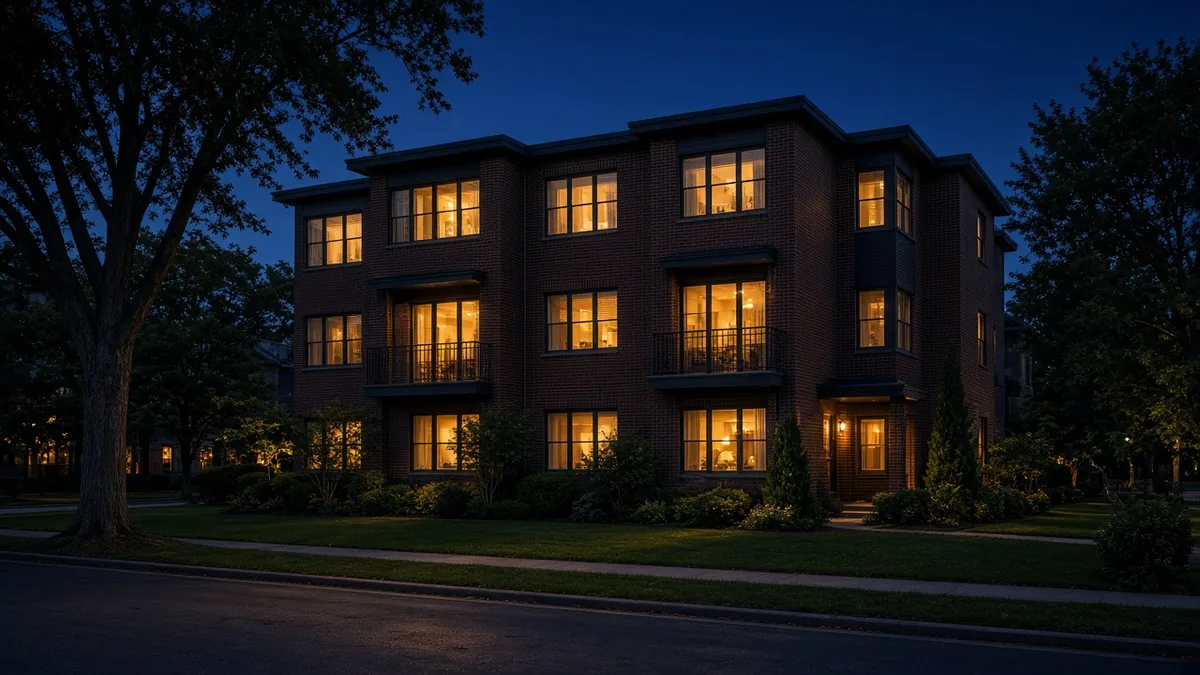
A DSCR loan for 5-8 unit multifamily is not a fourplex file with two extra doors. The fifth unit is where many dedicated 1–4 residential DSCR programs stop, and where small-balance multifamily overlays begin. The ratio name can stay the same. The product, the documents, and the investor experience test usually do not.
That line matters if you are shopping a fiveplex the same way you shopped a single-family rental. A 1–4 DSCR loan typically sizes to lease income or a market-rent schedule on a residential appraisal form. A 5–8 unit file is closer to a small apartment: a rent roll, trailing operations, and a capital provider that is no longer treating the asset like a house with extra bedrooms.
This guide is about that handoff. It is not a HUD 223(f) walkthrough. That program is a different lane with its own occupancy, proceeds, and third-party clock. Here the question is simpler: when does the file stop being a 1–4 DSCR loan?
When a DSCR Loan for 5-8 Unit Multifamily Leaves the 1-4 Lane
Residential DSCR products are built around 1–4 unit investment property. A fourplex DSCR loan is still inside that box. Add a fifth dwelling unit and most of those matrices go silent. The property is now multifamily in the ordinary housing sense HUD uses for buildings with five or more residential units.
Crossing that line does not automatically mean you are in a large agency or conduit deal. It means the 1–4 DSCR desk is often the wrong desk. What replaces it is usually a small-balance multifamily or commercial-leaning product that still tests cash flow with a coverage ratio, plus overlays that 1–4 files never saw.
Typical tripwires include unit count, loan amount, and how income is proven. A vacant fourplex might still be discussed on market rent. A vacant seven-unit building is a lease-up story, and many 5–8 overlays want in-place income or a documented path to stabilization that is stricter than a 1–4 market-rent schedule.
What Changes in the File After Four Units
On 1–4, the income package is often leases plus a rent schedule on a residential appraisal. On 5–8, expect a full rent roll, trailing-twelve or year-to-date operating statements, and a commercial-style appraisal. Taxes, insurance, and operating expenses stop being a footnote. They become the difference between a ratio that works on paper and a ratio that fails after vacancy and expense loads.
Reserves also tend to thicken. A 1–4 DSCR file may want a set number of months of PITIA. A 5–8 file often wants more liquidity, sometimes sized to the building rather than a single house payment. Capital providers vary. None of those overlays are a statute. They are credit boxes.
Experience is the overlay that surprises first-time buyers. A dedicated 5–8 DSCR-style product frequently wants prior investment ownership, not a first closing. That is the opposite of many 1–4 DSCR paths that still entertain a first rental. If you have never closed an investment property, treat 5–8 as a later chapter, not a starter product.
Short-term rental income is another common cut. Plenty of 1–4 DSCR programs will look at furnished-rental reports. Many 5–8 overlays want long-term tenancy only. If the business plan is nightly stays in a six-unit, you are often out of the small-balance DSCR box before the ratio is even run.
Small-Balance Multifamily Overlays Versus a 1-4 DSCR Product
Keep the products distinct even when both use a coverage ratio. A 1–4 DSCR loan is a residential investment product: property income, lighter personal income docs, residential forms. A 5–8 file may still be labeled DSCR in conversation, but the underwriting is closer to small multifamily commercial work.
That can show up as:
- A higher minimum loan amount than a typical 1–4 DSCR floor
- A coverage test that uses underwritten net operating income, not just gross rent divided by PITIA
- Recourse, entity, and guaranty language that looks more commercial
- A credit-score and reserve stack that tightens because unit count rose, not because your personal W-2 changed
How many DSCR loans you can stack on 1–4 assets is a different exposure conversation than concentrating in one 7-unit building. Portfolio 1–4 DSCR and a single 5–8 close are not interchangeable risk.
Not HUD 223(f), and Not a Construction Story
Investors who hear “five-plus units” sometimes jump to HUD 223(f). That program is for existing multifamily that can live with a longer federal process, third-party reports, and program-level LTV and coverage tests. A small-balance 5–8 DSCR-style close is usually trying to be faster and more private-credit in feel. It is not a substitute for 223(f), and 223(f) is not a 1–4 DSCR loan with extra units.
This site also does not treat 5–8 as a construction, spec, or raw-land path. The useful file is an existing investment building you are buying or refinancing as a going concern, or a stabilized hold. If the asset is still a hole in the ground, you are in a different product family entirely.
How to Tell Which Desk Should See the Deal
Ask four questions before you send a package:
- Is the legal unit count 1–4 or 5–8?
- Is income proven with residential leases and a rent schedule, or with a rent roll and operating history?
- Does the capital provider’s 1–4 DSCR matrix even list 5+ units?
- Are you being asked for investor experience that a first rental would not satisfy?
If the answer to (1) is 5–8 and (3) is no, stop forcing a 1–4 DSCR label. Move the conversation to small-balance multifamily or commercial cash-flow underwriting. If you are scaling from 1–4 units into multifamily, plan the product switch before you go under contract, not after the appraisal is ordered on the wrong form.
A long-term rental DSCR mindset still helps on 5–8: in-place leases are easier to defend than a pro forma. The difference is that the lease stack is now a building, not a house.
What to Bring So the File Does Not Bounce
Have the unit mix, in-place rents, lease expiration calendar, trailing expenses, and a clear occupancy picture ready. Note any commercial space in the building. Even a small office or shop can push a “residential DSCR” story into mixed-use treatment.
Do not quote a coverage floor as if it were law. Some 5–8 overlays want coverage at or above 1.00x on underwritten income. Others want more. Some 1–4 DSCR products will look at ratios below 1.00x with compensating factors. Those are overlays. They change by capital source and by day. A confidential scenario review is how you learn the box that actually applies to your building.
Exploring DSCR financing for an investment rental? Submit a confidential inquiry or call (907) 841-1600.
Frequently Asked Questions
Is a 5-unit still a residential DSCR loan?
Usually not on a dedicated 1–4 DSCR matrix. Five dwelling units is the common break where the file is treated as small multifamily instead of a residential 1–4 investment loan. Some capital providers still use a coverage ratio. That does not put the deal back on the fourplex form set.
Can a first-time investor use a DSCR loan for 5-8 unit multifamily?
Often no. Many 5–8 overlays want prior investment closings or a documented operating history. A first rental is more often a 1–4 DSCR conversation. Treat experience rules as overlays that vary, not as a promise that any sponsor can close a seven-unit on the first try.
How is a 5-8 DSCR-style file different from HUD 223(f)?
223(f) is a federal multifamily program with its own proceeds tests, third-party reports, and timeline. A small-balance 5–8 coverage loan is typically a private-credit or portfolio-style product aimed at existing buildings. They are not substitutes, and neither one is a 1–4 residential DSCR loan.
Do short-term rental numbers work on a 5-8 unit DSCR file?
Many 5–8 overlays want long-term tenancy and will not take nightly or weekly reports the way some 1–4 DSCR programs will. If the business plan is furnished stays, ask that question before you spend money on an appraisal. The answer is overlay-driven and can be a hard stop.
Have a property in mind?
Submit a confidential inquiry — business-purpose and investment property only.
Start InquiryDisclaimer: This article is for informational purposes only and does not constitute financial, lending, legal, or tax advice. Commercial & DSCR Loans is a marketing and referral information service — not a lender, broker, or financial institution. Content relates to business-purpose and investment property financing only. Disclaimer · Terms · Privacy